- email: contact@annecy-ophtalmo.fr
- 645 Route de Champ Farçon, 74370 Argonay
- Call us: +33 450230323
Corneal conditions
Les pathologies cornéennes sont des affections de la cornée, qui est la partie transparente et en avant de l'œil. La cornée joue un rôle important dans la réfraction de la lumière, qui permet de voir les objets clairement. Certaines pathologies cornéennes peuvent affecter la vision et nécessiter un traitement.
Here are some examples of corneal conditions:
- The keratitis : this is inflammation of the cornea that can be caused by infection, injury or irritation. It can cause pain, blurred vision, watering and redness of the eye.
- The keratoconus : this is a progressive disease that causes the cornea to lose its shape, which can lead to blurred vision and astigmatism that is difficult to correct with glasses.
- The corneal dystrophies : are hereditary corneal disorders that can cause blurred vision, halos around lights and increased sensitivity to light.
- Thecorneal ulcer : this is an open sore in the surface layer of the cornea that can be caused by infection or injury. It can cause pain, blurred vision and redness of the eye.
Il existe d'autres pathologies cornéennes, comme la dégénérescence cornéenne, l'érosion cornéenne, la sécheresse oculaire, etc.
Keratoconus
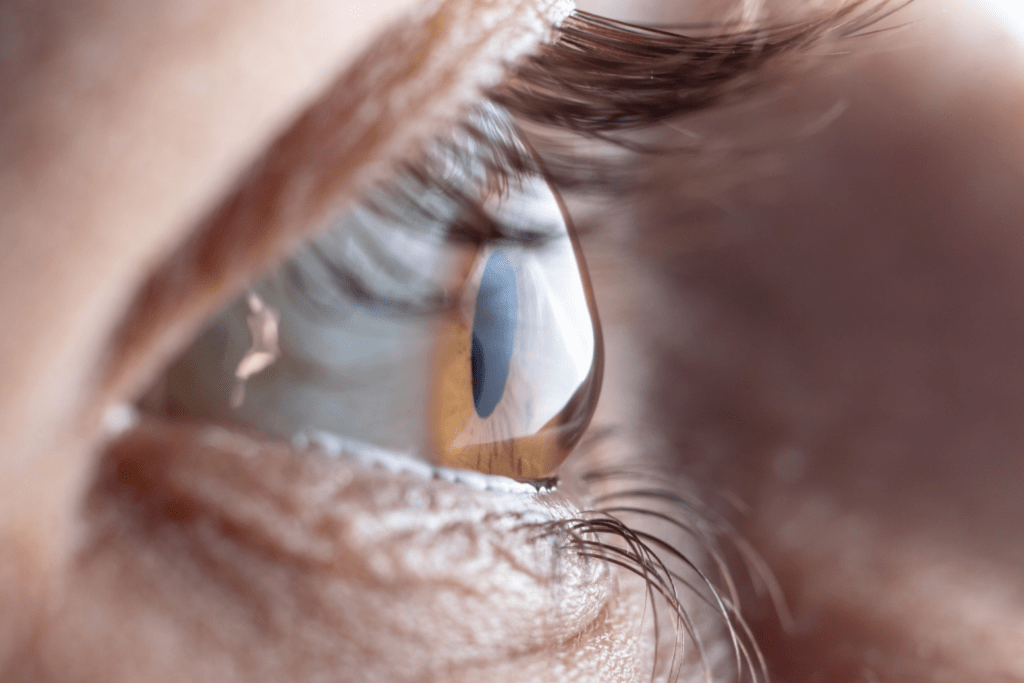
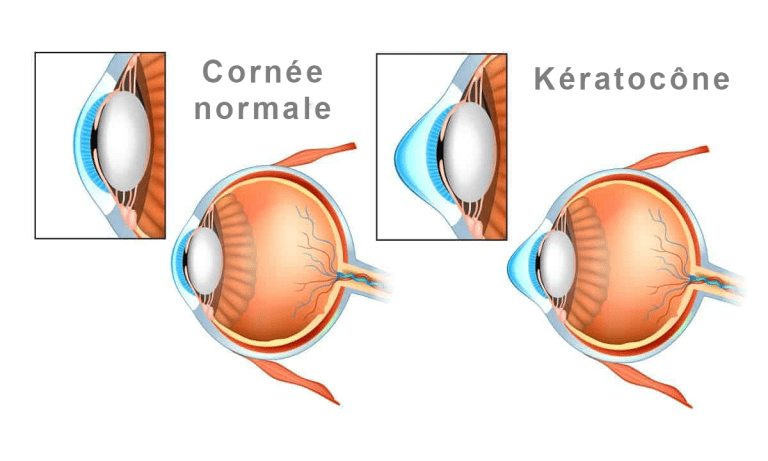
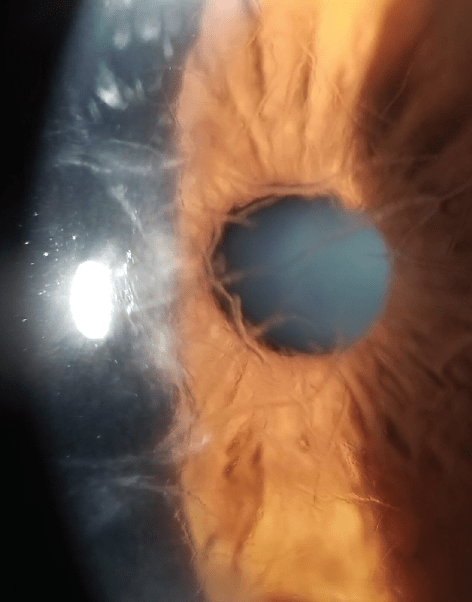
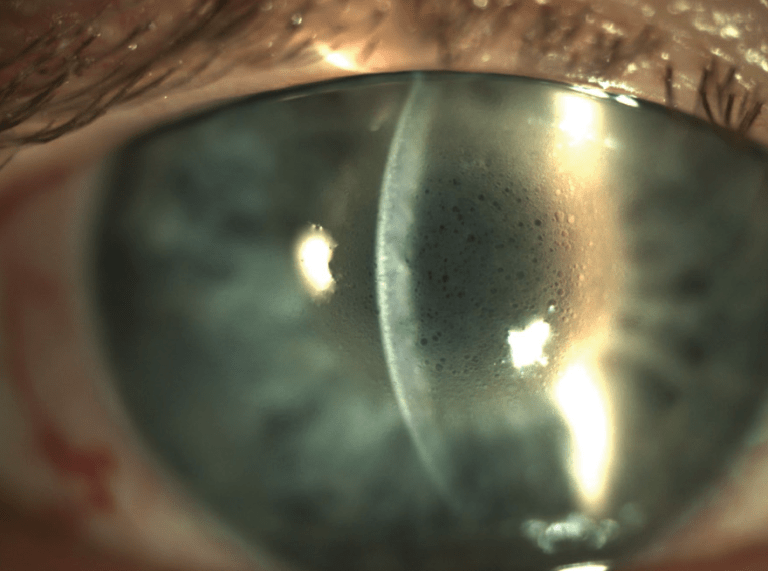
Keratoconus is a rare disease affecting the cornea, the transparent part at the front of the eye. It is characterised by a sagging of the cornea, which becomes cone-shaped instead of remaining dome-shaped. This corneal deformation may cause blurred vision and astigmatism, an imperfection in the refraction of light by the eye.
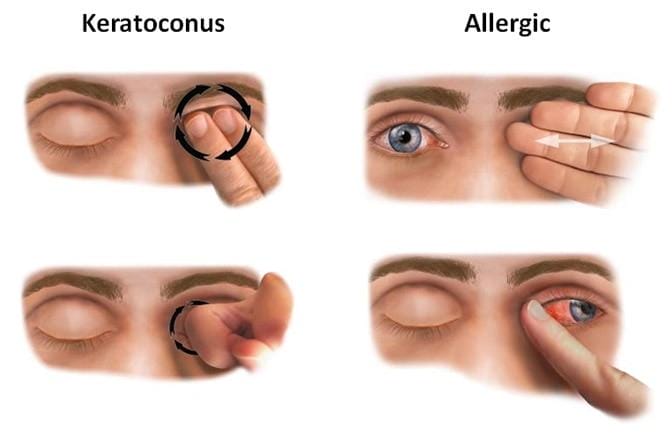
Une constante dans la genèse du kératocône, sans laquelle le kératocône n'existe pas, est eye rubbing.
Keratoconus may become symptomatic as early as adolescence and develop gradually. It can affect one or both eyes.
Le traitement du kératocône dépend de l'étendue de la déformation de la cornée et de la gravité de la perte de vision. Dans certaines situations et afin d'en enrayer son évolution un traitement stabilisant le collagène de la cornée peut être envisage (cross linking).
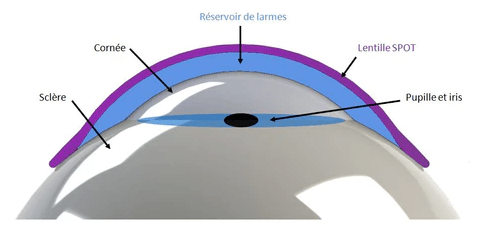
It may include soft or rigid corneal contact lenses, scleral lenses or glasses to correct vision.
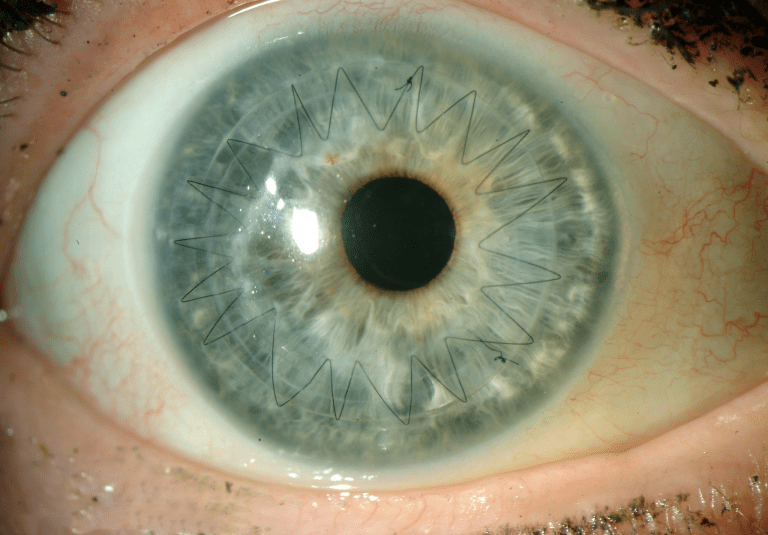
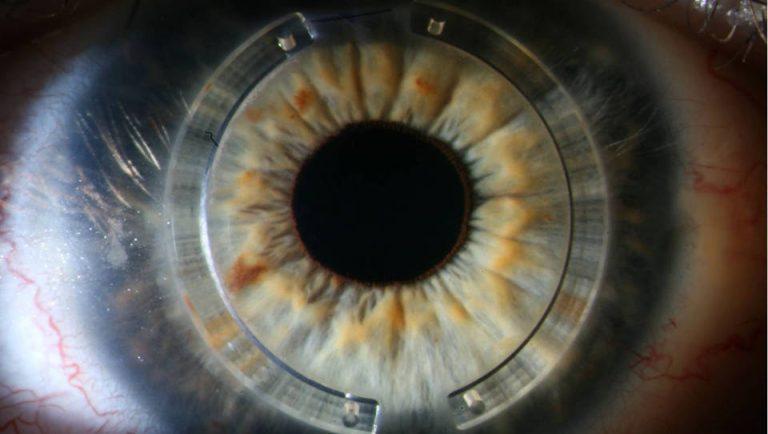
Dans certains cas peuvent être proposés la pose d'anneaux intra-cornéens ou une greffe de cornée.


Managing keratoconus at our centre
Our team manages the various aspects of keratoconus, from diagnosis to treatment.
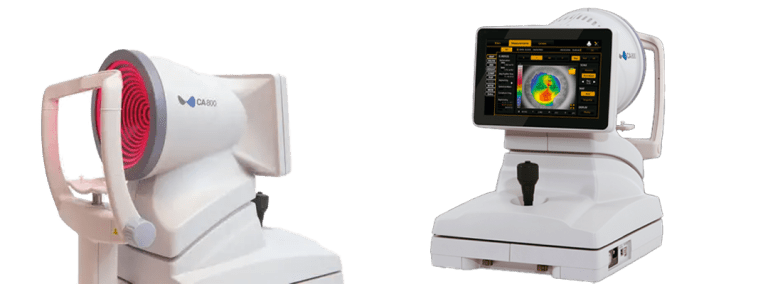
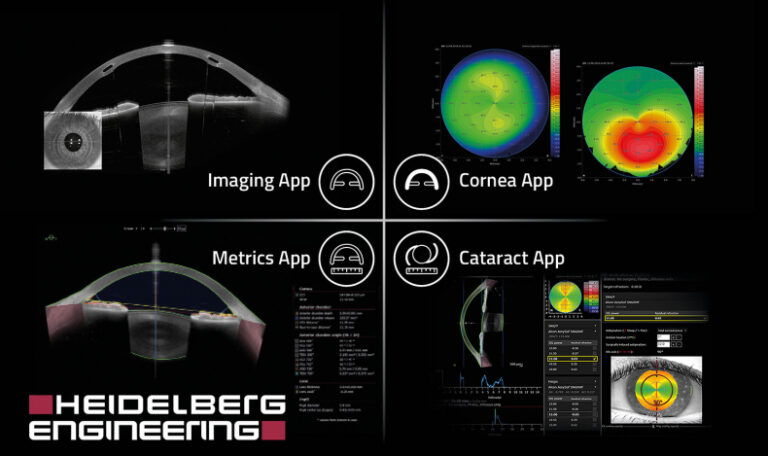
- Early screening grâce au topographe CA-800 et à l'Anterion d'Heidelberg
- Adaptation en soft, rigid and scleral contact lenses
- Stabilisation du kératocône par Cross linking
- Pose d'intracorneal ring segments
- Corneal transplants
Corneal dystrophies
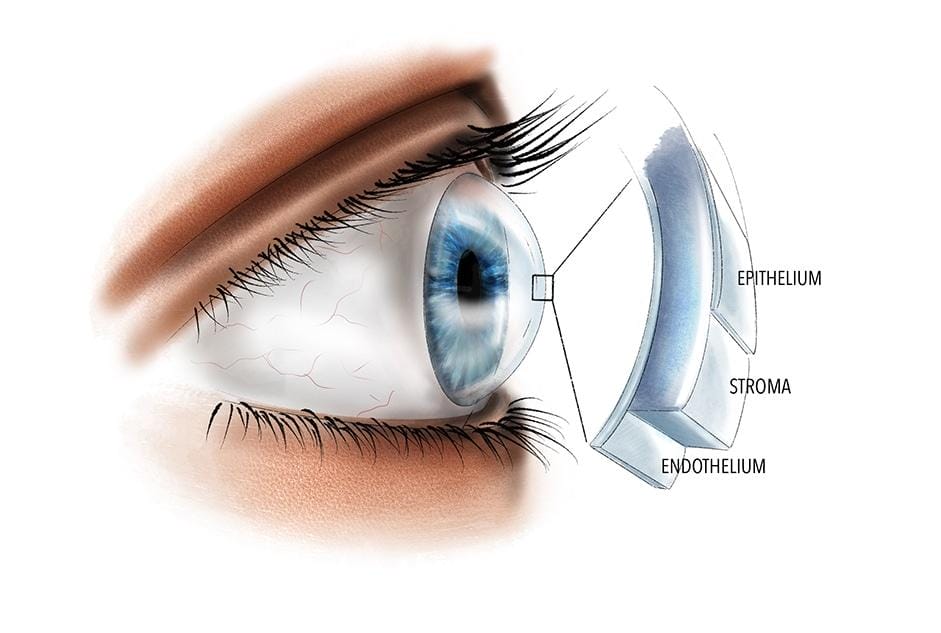
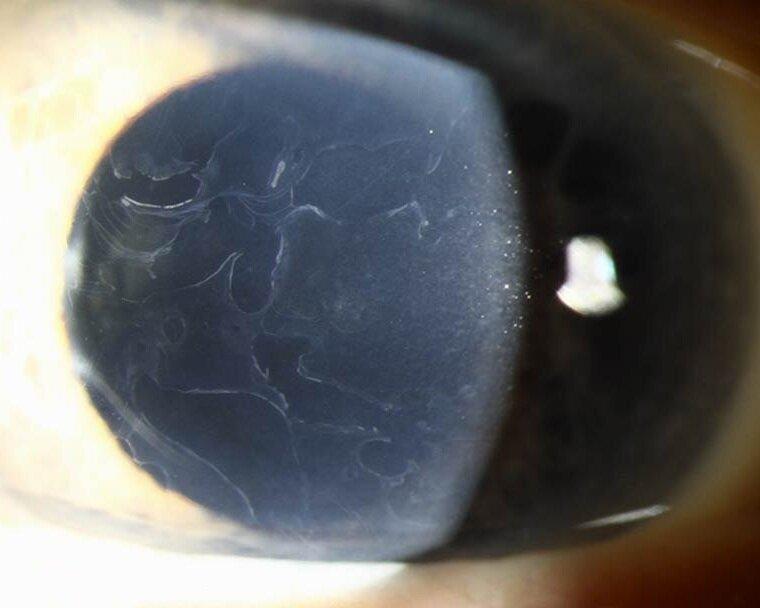
Corneal dystrophies are a group of hereditary disorders affecting the cornea, the transparent part at the front of the eye. They are characterised by abnormalities in the structure or composition of the cornea that may cause vision problems and light sensitivity.
There are several types of corneal dystrophies, which can be classified according to the layer of the cornea affected:
- The epithelial dystrophies : these affect the surface layer of the cornea, called the epithelium. They can cause changes in corneal colour, watering, pain and blurred vision.
- The stromal dystrophies : these affect the middle layer of the cornea, called the stroma. They can cause blurred vision, halos around lights and increased sensitivity to light.
- The endothelial dystrophies : elles affectent la couche la plus profonde de la cornée, qui est appelée endothélium. Elles peuvent provoquer une opacification de la cornée, une vision floue et une sensibilité accrue à la lumière.


Treatment of corneal dystrophies depends on the type and severity of the dystrophy. It may include corneal contact lenses or glasses to correct vision, and medicines to relieve symptoms. In some cases, a corneal transplant may be necessary.
Managing corneal dystrophies at our centre
We provide medical and surgical management of endothelial dystrophies
- Diagnosis
- Adaptation en soft, rigid and scleral contact lenses
- Penetrating corneal transplant (KT)
- Endothelial transplant (DMEK)
Learn more
Good to know
- The cornea is the eye's transparent “window”: its condition determines the clarity of vision and contact lens wear.
- Depending on the disease: eye drops, special lenses (scleral), cross-linking or a lamellar transplant (for example DMEK) replacing only the affected layer.
Our doctors
- Dr Florian Baudincornea, refractive surgery, cataracts, glaucoma, medical retina
See also all our doctors and our publications.
In the event of sudden loss of vision or pain, see eye emergencies.
Explore our information resource on corneal conditions and their management
Links
Explore this topic further
Your ophthalmologist answers your questions during the consultation. For a sudden symptom or sudden loss of vision, seek advice promptly: see the eye emergencies page.
Our practices
Annecy-Argonay
645 route de Champ Farçon, 74370 Argonay
Faverges
27 place Gambetta, 74210 Faverges
Rumilly
5 rue Frédéric Girod, 74150 Rumilly
Sallanches
35 rue Emma Lanche, 74700 Sallanches
04 50 23 03 23Book an appointmentDirections and parkingReception Monday to Friday, 8 am – 6 pm