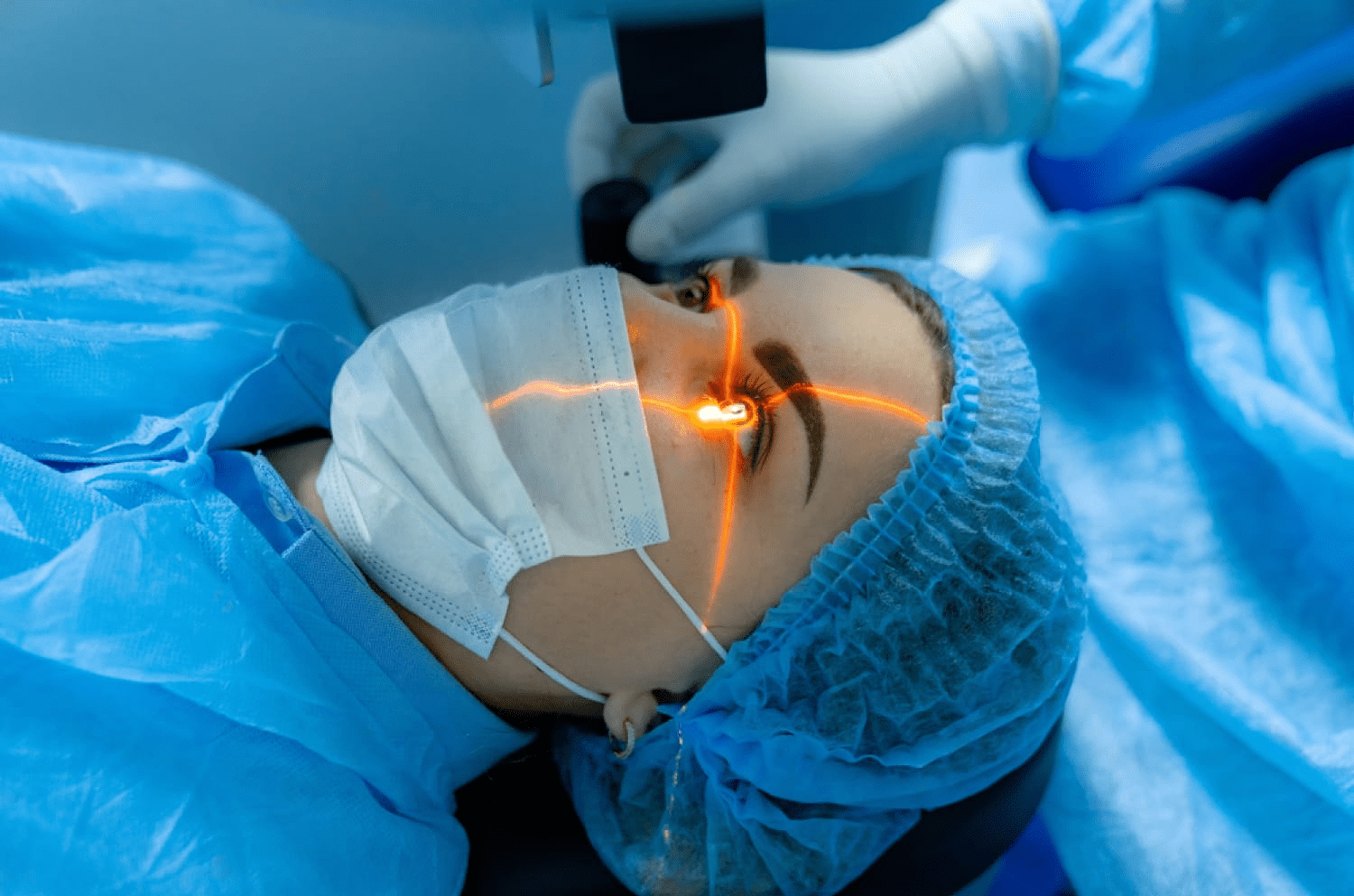
Surgery
An ophthalmologist can perform many procedures depending on the various conditions that may affect the eye and orbit.
Cataract surgery : Cataract surgery is a treatment for cataracts, which are a clouding of the eye’s lens. Surgery involves removing the cloudy lens and replacing it with an intraocular lens implant.
Eyelid surgery : Eyelid surgery can be performed to correct drooping eyelids or fatty bags under the eyes that can impair vision or affect appearance.
Corneal transplant : Corneal transplantation is a surgical procedure to replace part of a damaged or diseased cornea with a layer of healthy cornea from a donor.
Pterygium surgery : Pterygium surgery is a procedure to treat an abnormal growth of the conjunctival membrane over the cornea. It can cause impaired vision and eye pain.
Refractive surgery : Refractive surgery is a procedure to correct refractive errors such as short-sightedness, long-sightedness or astigmatism. Refractive surgery techniques include laser photokeratectomy, in situ keratomileusis (LASIK) and lens surgery.
Glaucoma surgery : Glaucoma surgery is a treatment for glaucoma, which can cause loss of peripheral vision followed by total loss of vision if left untreated. Common surgical procedures for glaucoma include laser trabeculoplasty, sclerectomy and trabeculoplasty.
Strabismus surgery : Strabismus surgery is a treatment for strabismus, a misalignment of the eyes. Surgery involves tightening or stretching the eye muscles to correct the misalignment.
Retinal surgery : La chirurgie de la rétine est une intervention pour traiter les atteintes rétiniennes telles que les déchirures et décollement de rétines, les membranes rétiniennes... Les techniques courantes de chirurgie de la rétine comprennent la photocoagulation au laser, cryocoagulation et la vitrectomie.