Mon–Fri 8:00 - 18:00
YouTube

Glaucoma

Glaucoma

Il existe plusieurs types de glaucome, mais les plus courants sont :

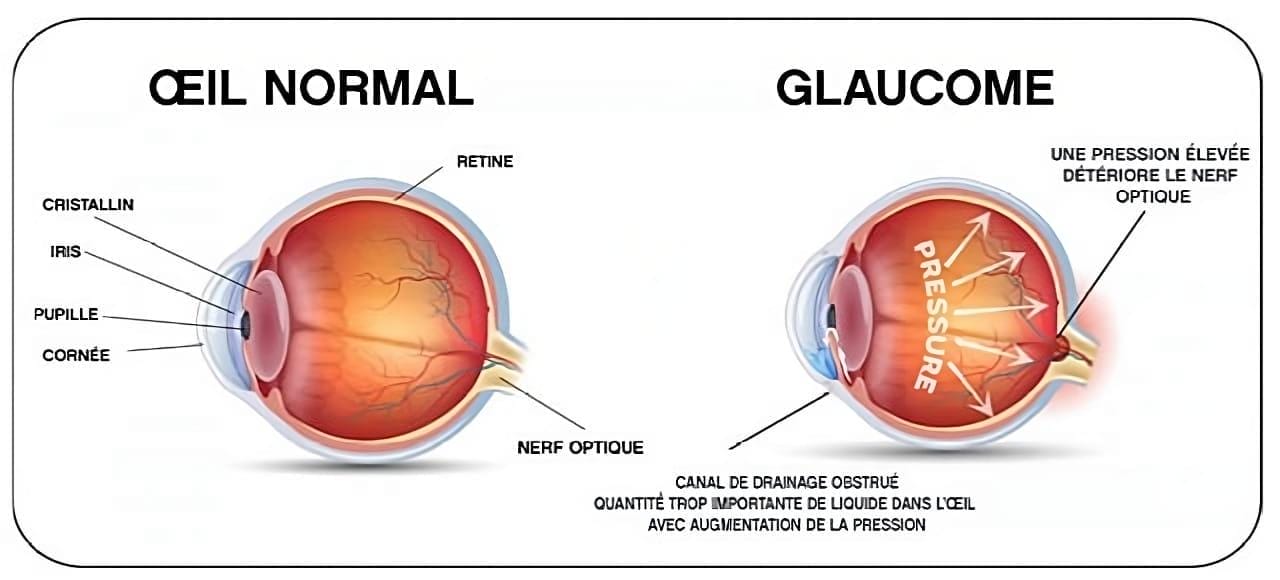
Open-angle glaucoma : this is the most common type of glaucoma and occurs when the flow of fluid inside the eye is obstructed or too much of this fluid is produced, which can cause an increase in intraocular pressure.

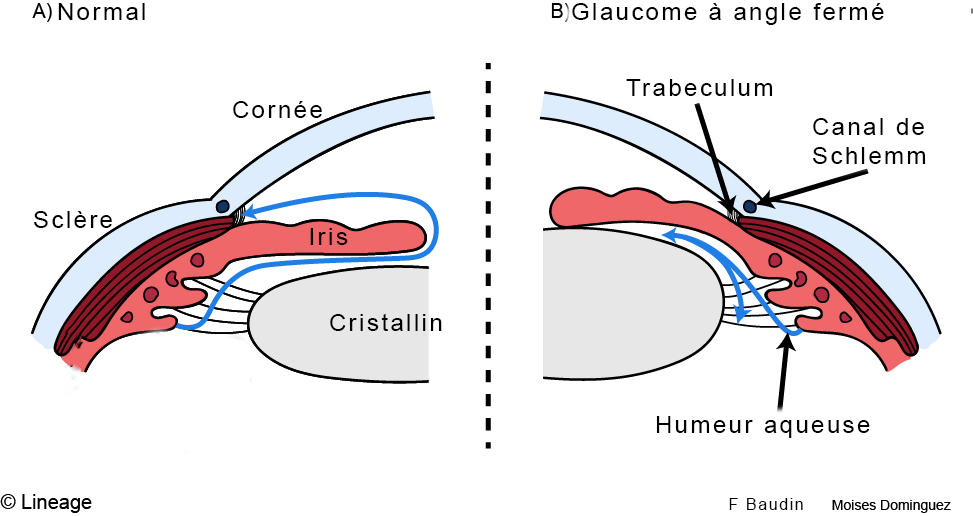
Angle-closure glaucoma : this is a rarer type of glaucoma that occurs when the angle between the iris and the cornea is blocked, preventing fluid from draining properly.

Secondary glaucoma : this type of glaucoma is caused by other health problems, such as infections, tumours, injuries or diseases such as diabetes.

Normal-tension glaucoma : cette forme de glaucome se produit lorsque la pression intraoculaire est normale, mais que le nerf optique est endommagé.

Il est important de noter que glaucoma can remain asymptomatic for a long time and that visual impairment can develop slowly without the patient noticing. It is therefore important to see an ophthalmologist regularly for an examination of vision and eye pressure. Screening every 2 to 3 years is recommended from age 50.

The glaucoma is a condition that causes blindness.

Open-angle glaucoma

Le glaucome à angle ouvert est le type le plus courant de glaucome. Il se produit lorsque l'ouverture entre l'iris et la cornée ne permet pas un écoulement adéquat du liquide à l'intérieur de l'œil, ce qui peut causer une augmentation de la pression intraoculaire.

The risk factors pour le glaucome à angle ouvert incluent l'âge avancé, la forte myopie, la famille et l'ethnicité (il est plus fréquent chez les personnes d'origine afro-américaine et asiatique).

The treatment of open-angle glaucoma generally involves using eye medication to reduce the production of fluid in the eye and/or improve its drainage. If the disease progresses despite medical treatment, surgery may be necessary.

The risk of blindness lié au glaucome dépend de la gravité de la maladie, de la durée de la maladie et de la qualité et de la durée du traitement. Si le glaucome n'est pas traité, il peut causer une perte permanente de la vue et une cécité totale. Il est donc important de suivre les instructions du médecin et de faire des contrôles réguliers pour éviter la progression de la maladie.

Comparison of a normal eye and an eye with open-angle glaucoma

Angle-closure glaucoma

Le glaucome à angle fermé est un type plus rare de glaucome qui se produit lorsque l'angle entre l'iris et la cornée est bloqué, empêchant le liquide de s'écouler correctement. Ce blocage peut entraîner une augmentation de la pression intraoculaire.

The risk factors pour le glaucome à angle fermé incluent l'âge avancé, l'hypermétropie, la famille et certaines maladies telles que la cataracte ou l'inflammation oculaire.

Le traitement du glaucome chronique à angle fermé est d'abord preventive. By identifying patients at risk of an acute angle-closure attack and performing a laser in the iris allowing the risk of its occurrence to be greatly reduced.

In the event of a acute angle-closure attack, et donc d'une augmentation majeure de la pression intraoculaire, un traitement en urgence permettant de diminuer la pression et de calmer les douleurs sera initié.

Diagram of iridocorneal angle closure

Learn more

Good to know

  • Glaucoma gradually damages the optic nerve, most often without pain or warning signs at first: lost vision cannot be recovered, hence the value of screening.
  • The assessment combines eye pressure measurement, examination of the angle and optic nerve, OCT and visual field testing.
  • Risk factors: age, family history of glaucoma, high myopia, high eye pressure. Screening every 2 to 3 years is recommended from age 50; if there is a family history or other risk factors, your ophthalmologist adjusts the frequency.
  • Treatment aims to lower pressure: eye drops, laser or surgery, including minimally invasive glaucoma surgery (MIGS) combined with cataract surgery.

Our doctors

See also all our doctors and our publications.

In the event of sudden loss of vision or pain, see eye emergencies.

A question about your situation?

Your ophthalmologist answers your questions during the consultation. For a sudden symptom or sudden loss of vision, seek advice promptly: see the eye emergencies page.

Book an appointmentContact receptionOur locations

Our practices

Annecy-Argonay

645 route de Champ Farçon, 74370 Argonay

Faverges

27 place Gambetta, 74210 Faverges

Rumilly

5 rue Frédéric Girod, 74150 Rumilly

Sallanches

35 rue Emma Lanche, 74700 Sallanches

04 50 23 03 23Book an appointmentDirections and parkingReception Monday to Friday, 8 am – 6 pm