Mon–Fri 8:00 - 18:00
YouTube

Cataract Implants & Refractive Lens Surgery in Annecy

Cataract surgery is no longer simply a procedure to restore clear vision. Today, it is a unique opportunity to correct your pre-existing refractive errors (myopia, hypermetropia, astigmatism, presbyopia) and reduce, or even eliminate, your dependence on glasses.

Choosing the implant that replaces your natural lens is therefore a crucial decision. At the Annecy-Ophtalmo practice, we make this stage a personalised plan for your eyes, thanks to our subspecialisation in refractive lens and corneal surgery.

Our Subspecialisation: Refractive Precision at the Heart of Your Procedure

Our commitment goes beyond simply treating cataracts. We aim for refractive excellence: the best possible visual outcome without glasses after surgery. This expertise rests on two pillars:

1. Dual Expertise in Refractive Surgery:
With recognised experience in corneal refractive surgery (laser), our team has an in-depth understanding of ocular optics. This dual expertise allows us to approach lens surgery with the same demand for precision as a laser procedure.
➡️ Discover our refractive surgery techniques on our partner website: Annecy Laser Vision

2. Exceptional Technical Facilities:
Precision does not happen by chance. It requires measurements of absolute reliability, obtained using the latest-generation equipment. Our practice has a complete diagnostic system to analyse your eye in the finest detail:

  • Advanced non-contact and ultrasound biometry: For an ultra-precise, personalised calculation of your lens implant power.
  • Anterior segment OCT (ANTERION - Heidelberg): Advanced technology that creates a complete 3D map of the front of the eye. It is essential for calculating toric lens implants (for astigmatism) with maximum precision and ensuring the best positioning.
  • Specular microscope: To assess the health of your cornea before any surgery, a key safety step.

Thanks to this technological environment, we can plan highly precise procedures, including complex cases such as eyes that have previously undergone corneal refractive surgery (laser, PRK, LASIK).

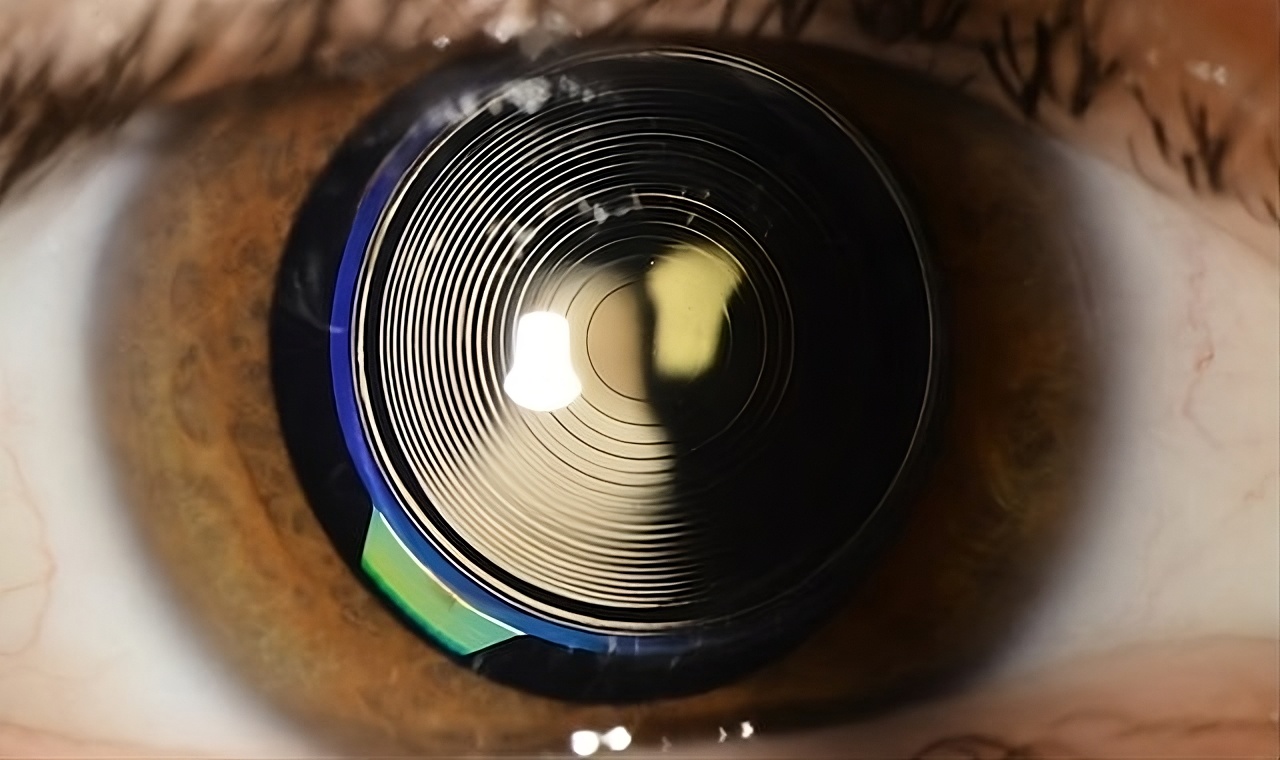
Close-up of an intraocular lens

The Different Types of Intraocular Lens Implants

The choice of lens implant is discussed with your surgeon during the preoperative consultation. It depends on your eye's anatomy, your expectations and your lifestyle.

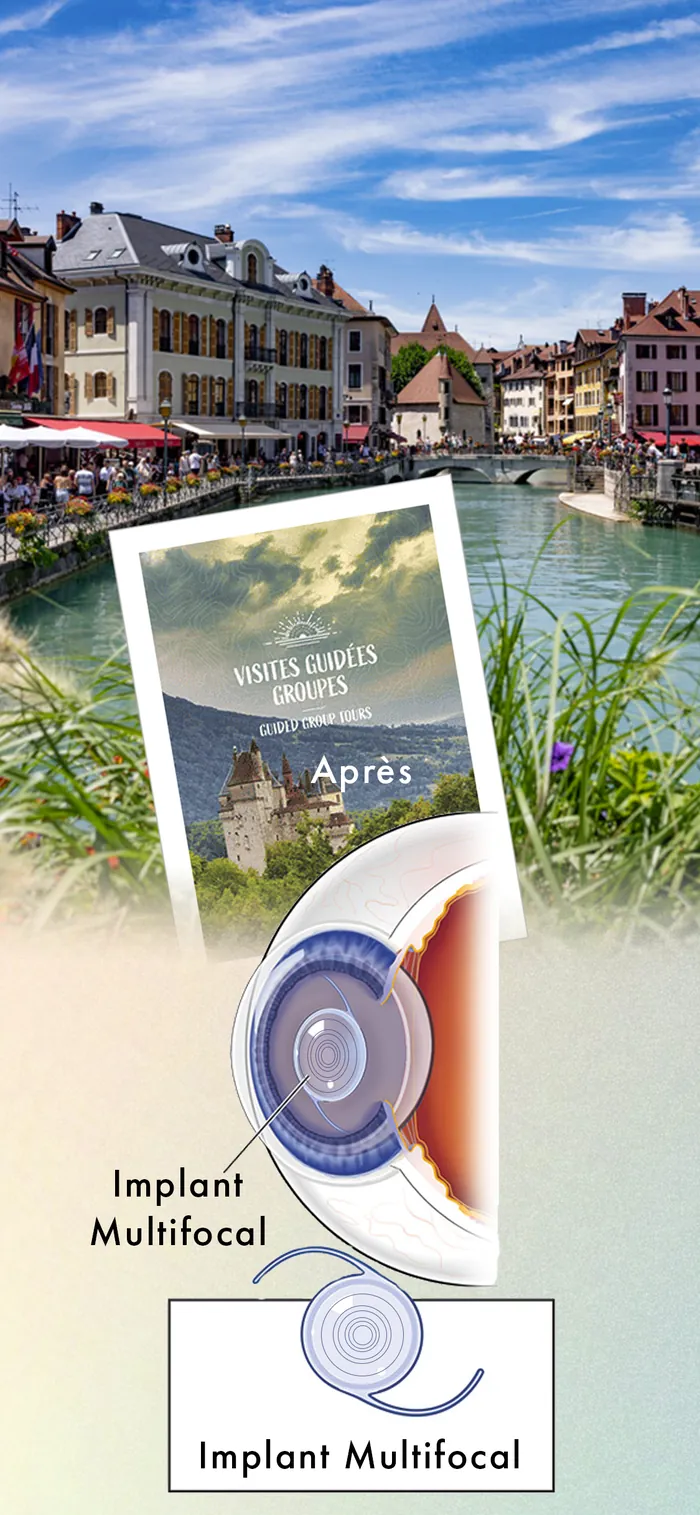
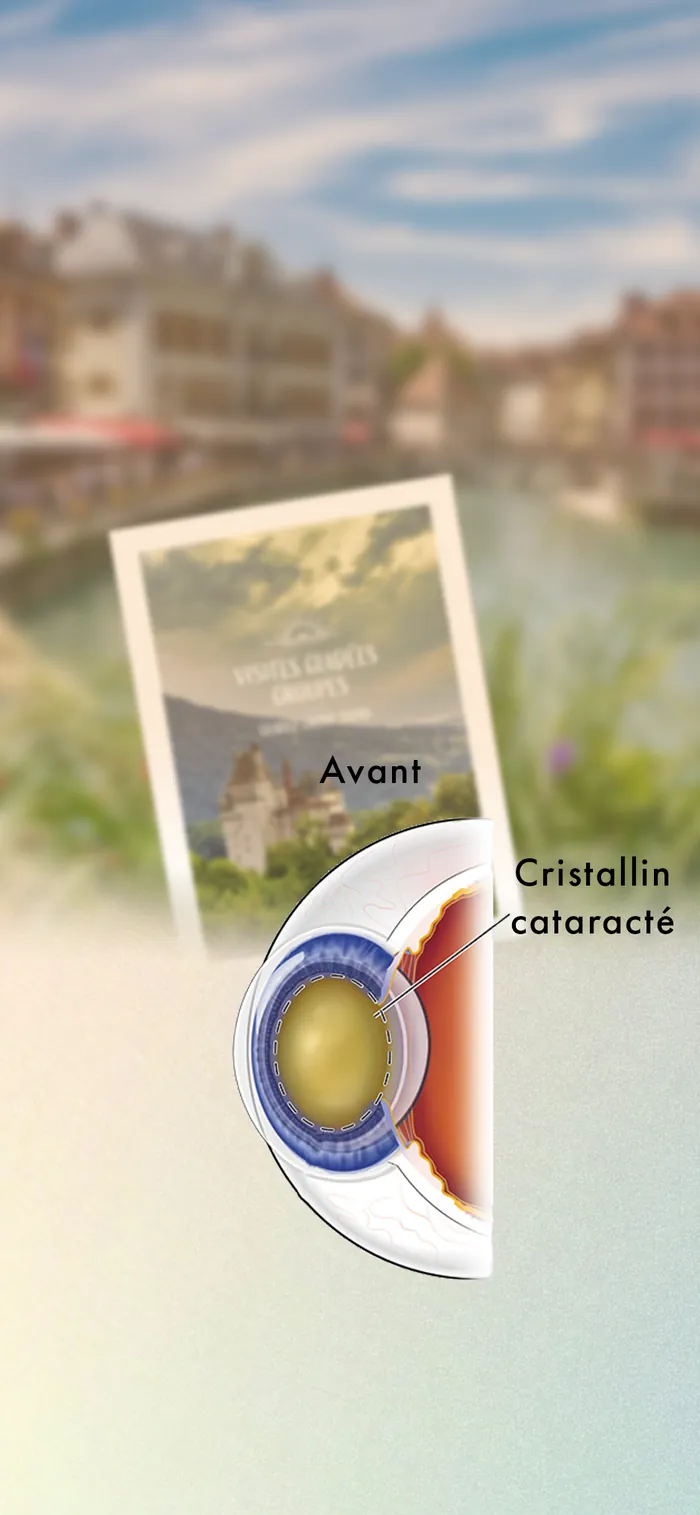
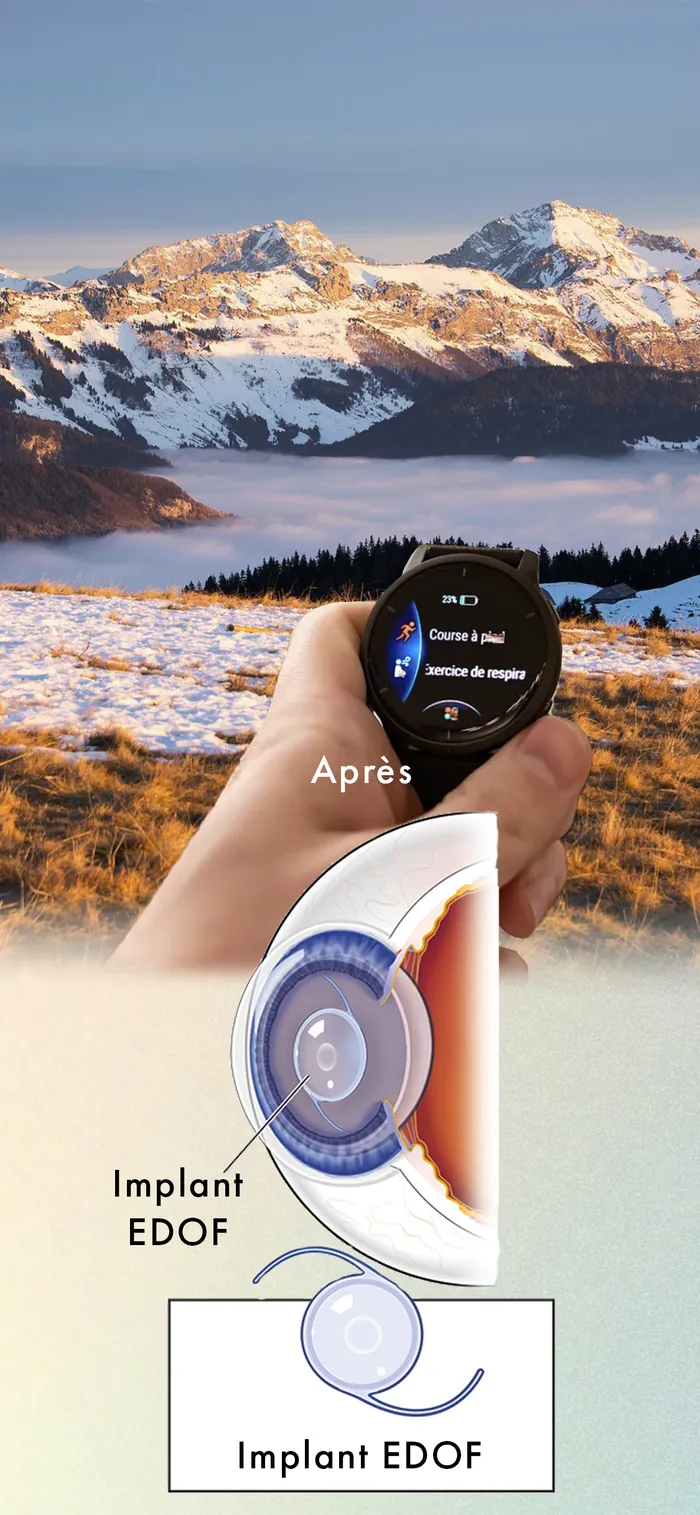
Simulate vision with different lens implants

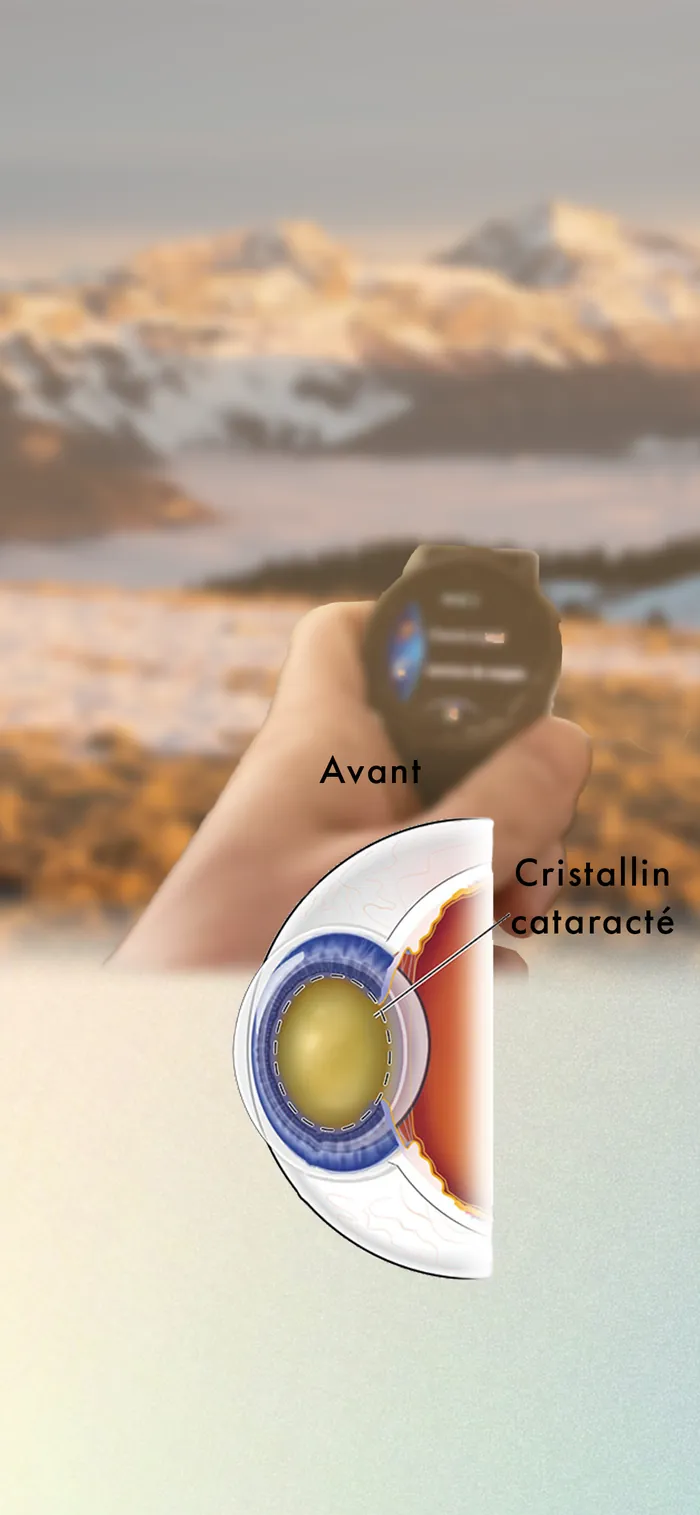
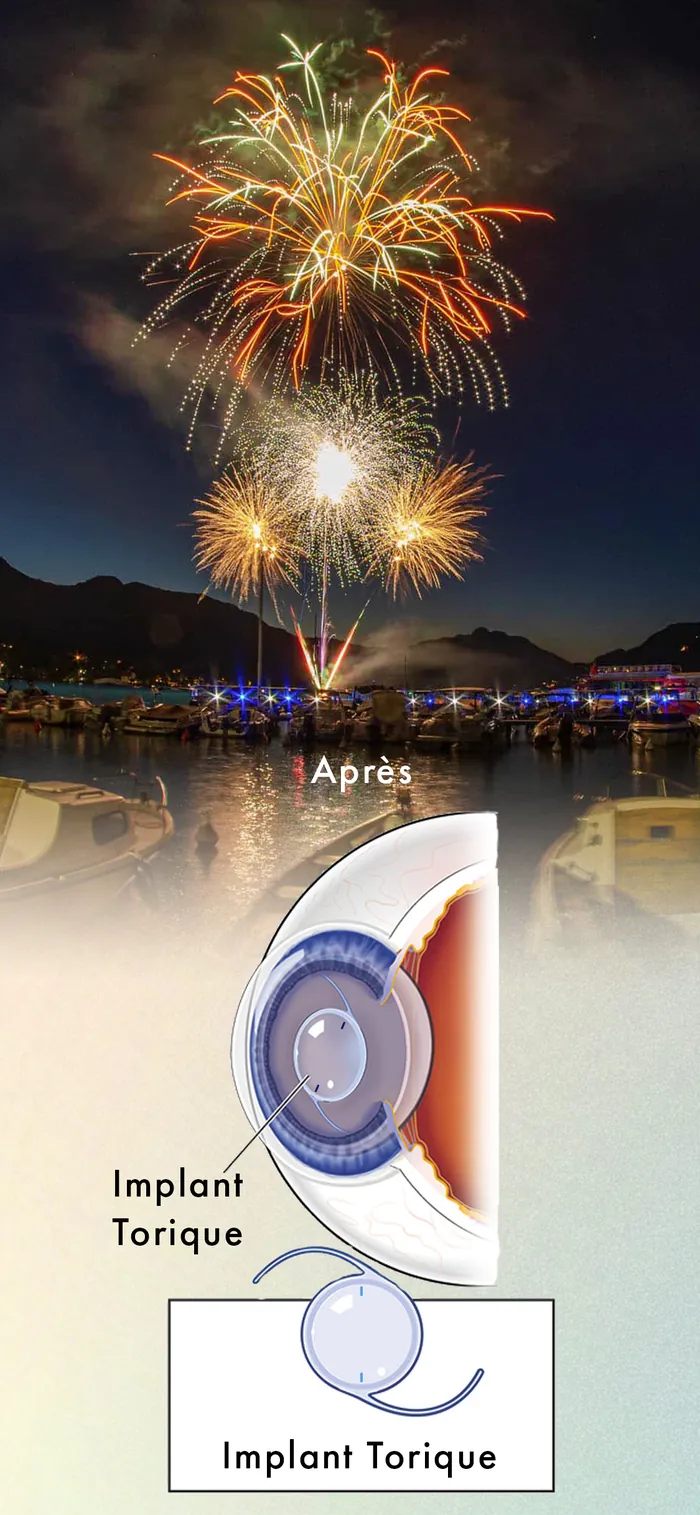
Choose a type of lens implant, then drag the slider to compare vision with a cataract and after surgery. These images are illustrations, not a guarantee of an outcome.
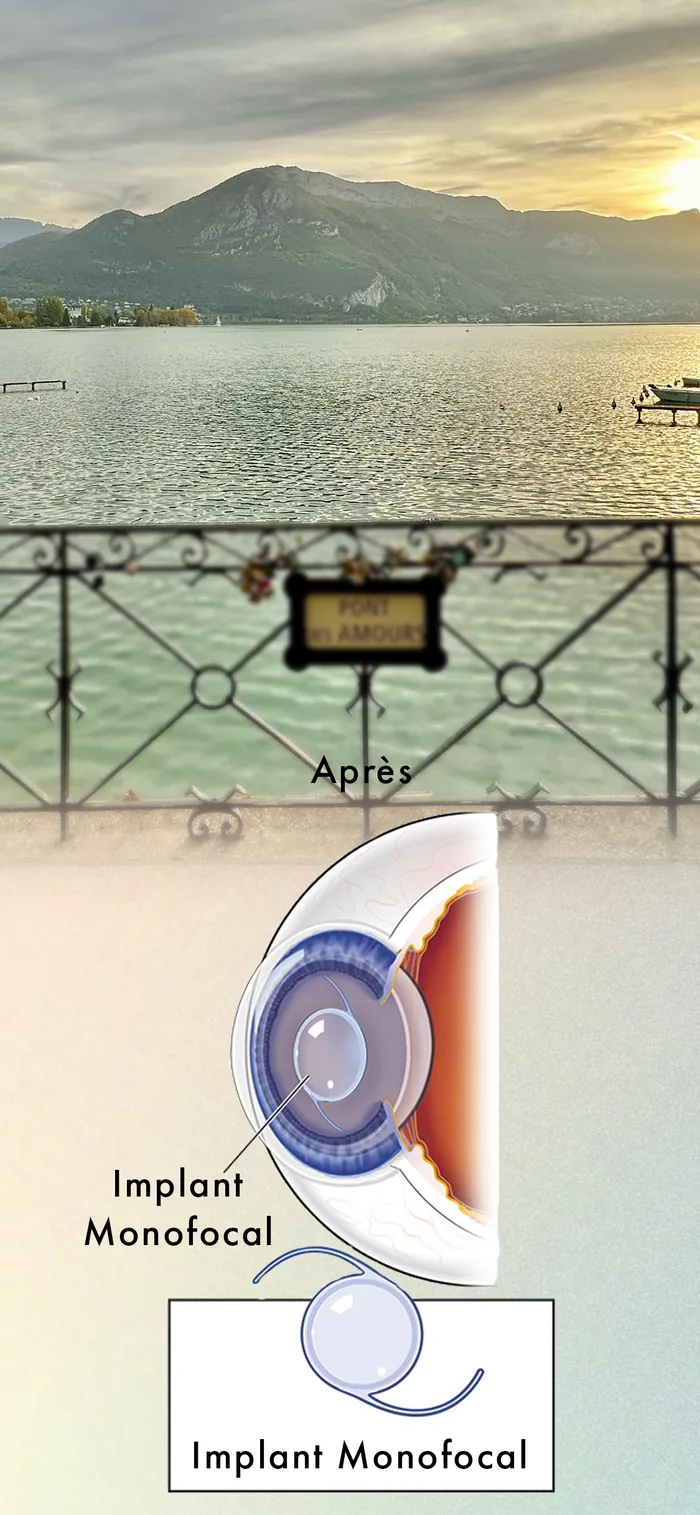
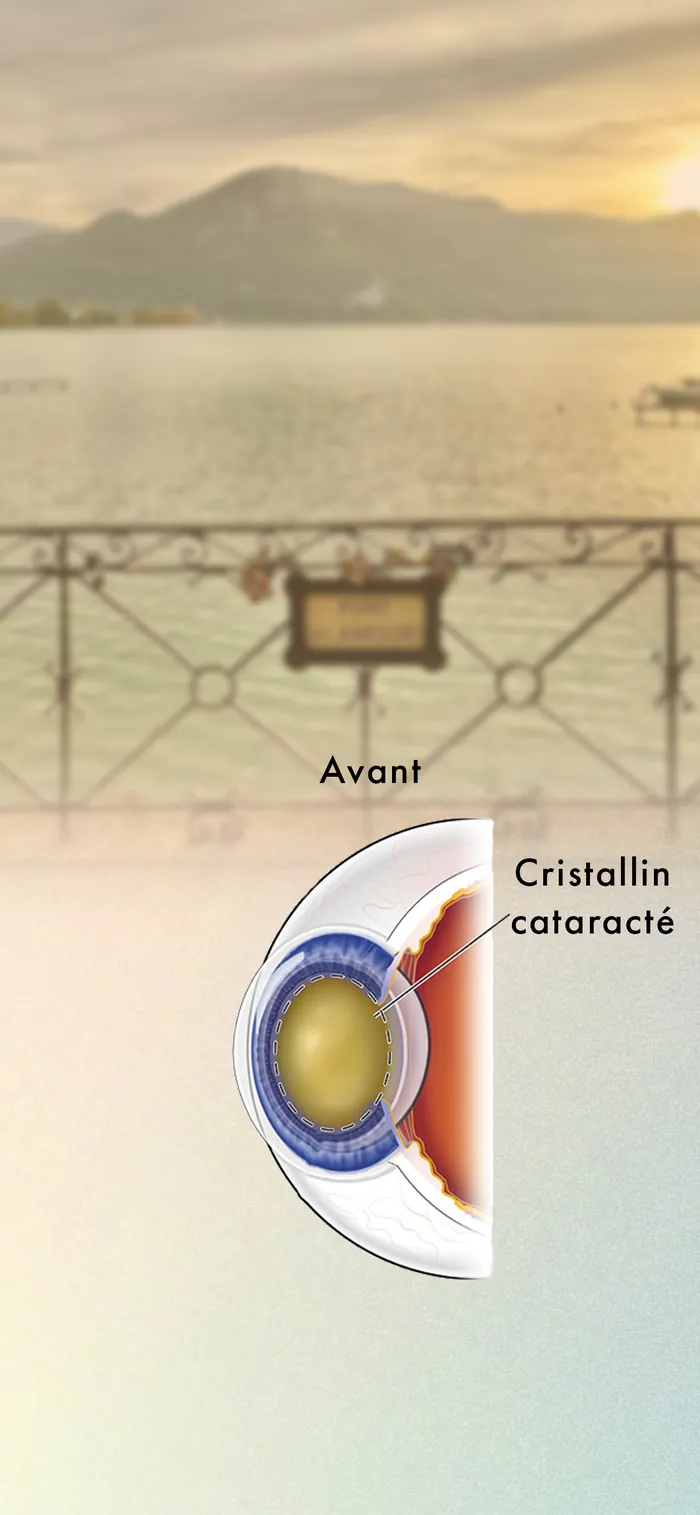
Simulation of vision with a monofocal lens implantSimulation of vision with a cataract
Before: cataractAfter: lens implant

Monofocal lens implant (standard)

This is the traditional lens implant. It has a single focal distance, most often set for distance vision.

  • Result: clear distance vision without glasses.
  • Limitation: glasses are still needed for near vision (reading, smartphone) and sometimes for intermediate vision (computer).
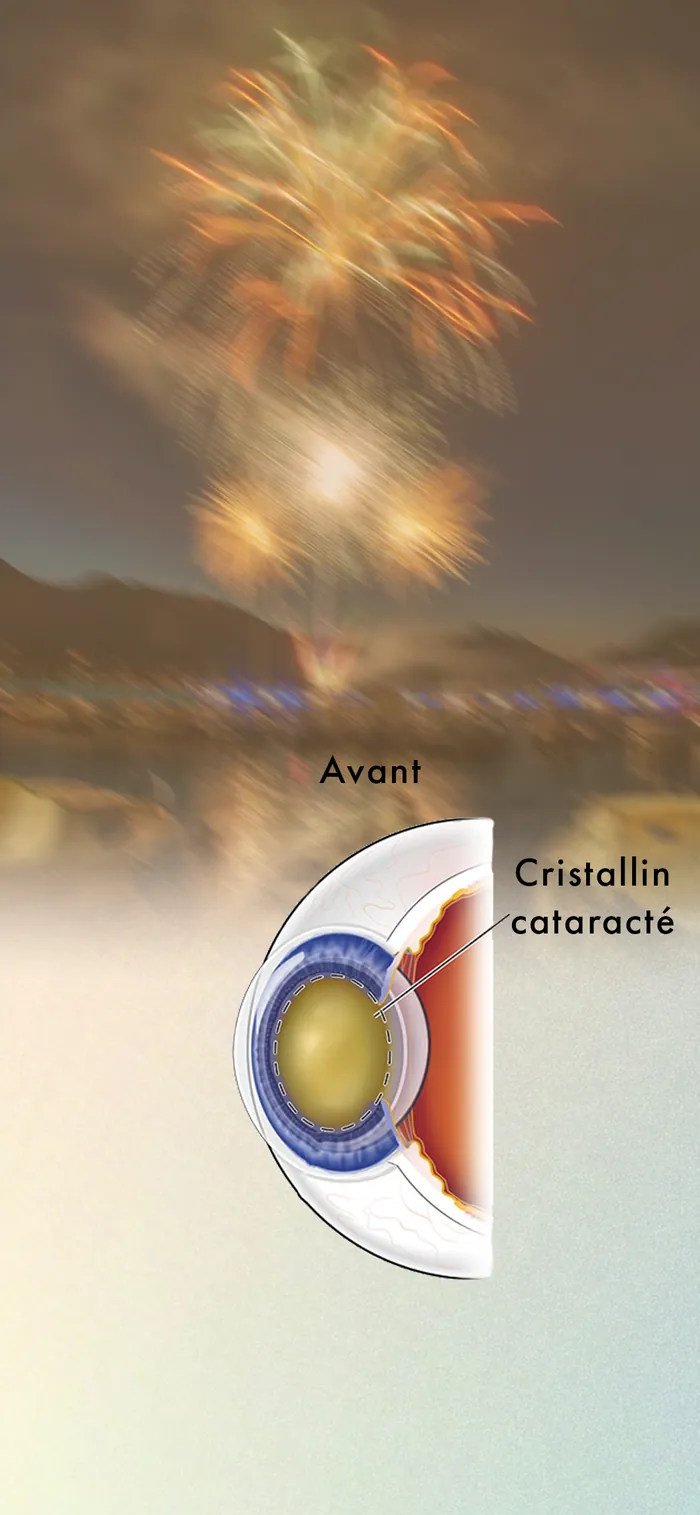
Which Lens Implant Suits You? A Personalised Decision

There is no universal lens implant. The best solution is the one that precisely suits your eyes and expectations. During the preoperative assessment, your surgeon will take time to analyse your test results and discuss with you:

  • Your lifestyle (work, leisure, driving...).
  • Your visual priorities.
  • The benefits and constraints of each option.

This discussion is essential to agree together on the care plan that will provide you with the greatest satisfaction.


Let Us Discuss the Best Solution for Your Vision Together

Make the most of cataract surgery to give your eyes the best possible vision. Book a preoperative consultation for a comprehensive assessment and to develop your personalised vision plan.

Or by telephone on: +33 450230323

Learn more

Good to know

  • Monofocal lens implants correct distance vision; multifocal or extended depth of focus implants reduce dependence on glasses, potentially at the cost of halos or reduced contrast in dim light.
  • Toric lens implants correct astigmatism. The choice depends on the eye, lifestyle and your expectations, and is discussed during a consultation.
  • A lens implant is not indicated for every eye: some retinal or corneal diseases point towards another choice.

Our doctors

See also all our doctors and our publications.

In the event of sudden loss of vision or pain, see eye emergencies.

Explore our information resource on cataracts and their management

Links

Explore this topic further

A question about your situation?

Your ophthalmologist answers your questions during the consultation. For a sudden symptom or sudden loss of vision, seek advice promptly: see the eye emergencies page.

Book an appointmentContact receptionOur locations

Our practices

Annecy-Argonay

645 route de Champ Farçon, 74370 Argonay

Faverges

27 place Gambetta, 74210 Faverges

Rumilly

5 rue Frédéric Girod, 74150 Rumilly

Sallanches

35 rue Emma Lanche, 74700 Sallanches

04 50 23 03 23Book an appointmentDirections and parkingReception Monday to Friday, 8 am – 6 pm