Mon–Fri 8:00 - 18:00
YouTube

Keratoconus

Learn more

Good to know

  • Eye rubbing is a known aggravating factor in keratoconus: it should be avoided, particularly in the presence of allergies.
  • Cross-linking aims to stabilise the cornea; special contact lenses correct vision when glasses are no longer sufficient.

Our doctors

See also all our doctors and our publications.

In the event of sudden loss of vision or pain, see eye emergencies.

Keratoconus: understanding and treating this corneal condition

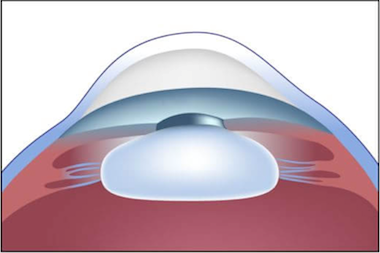
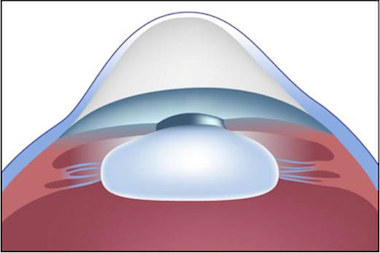
Keratoconus is an eye disease affecting the cornea, the transparent part at the front of the eye that helps focus light on the retina for clear vision. In keratoconus, the cornea gradually thins and takes on an irregular conical shape instead of its naturally rounded shape.

Diagram of a normal cornea Diagram of a cornea distorted by keratoconus
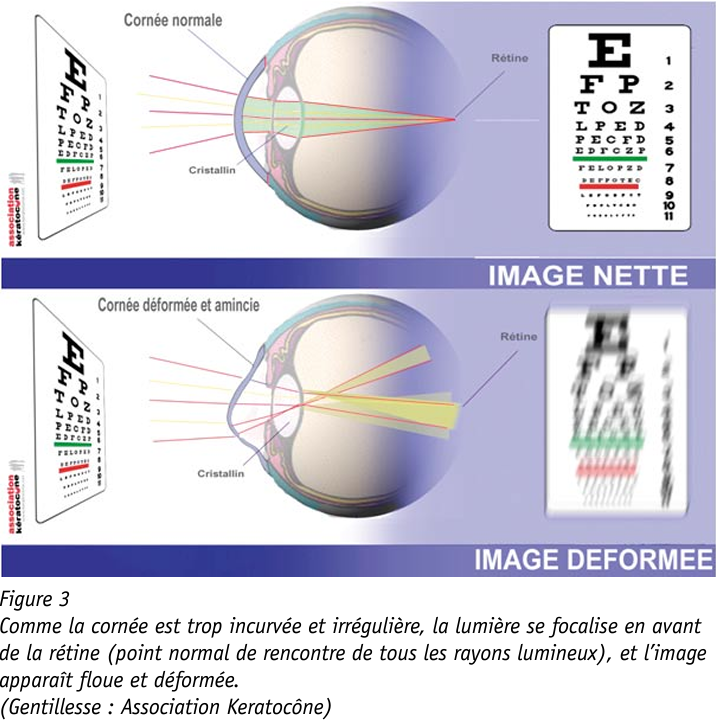
Keratoconus: diagram of visual distortion

This progressive change in the shape of the cornea causes blurred and distorted vision, with symptoms such as:

  • Myopia and astigmatism : Difficulty seeing at a distance and/or blurred near vision.
  • Double or multiple vision (polyopia) : Seeing several images of a single object.
  • Halos around lights : Rings of light appear around light sources, especially at night.
  • Sensitivity to light (photophobia) : Eye discomfort or pain in bright light.

Key terms explained:

Cornea
The transparent layer at the front of the eye covering the iris and pupil. It plays an essential role in refracting light.
Astigmatism
A refractive error caused by irregular curvature of the cornea or lens, resulting in blurred vision.
Short-sightedness
Difficulty seeing distant objects.
Cross-linking
A treatment that strengthens the cornea using riboflavin (vitamin B2) drops and ultraviolet light to create new bonds between collagen fibres.
Intracorneal ring segments
Small semicircular plastic implants inserted into the cornea to flatten the cone and improve vision.
Corneal transplant
A surgical procedure replacing the damaged cornea with a healthy donor cornea.

Living with keratoconus

Excessive eye rubbing may be an early sign of keratoconus and may even trigger the disease in predisposed people. Eye rubbing can weaken the outer layer of the cornea and alter its shape. It is therefore essential that all patients with keratoconus avoid rubbing their eyes so as not to worsen their condition.

Keratoconus diagnosis and treatment at Centre Médical des Aravis

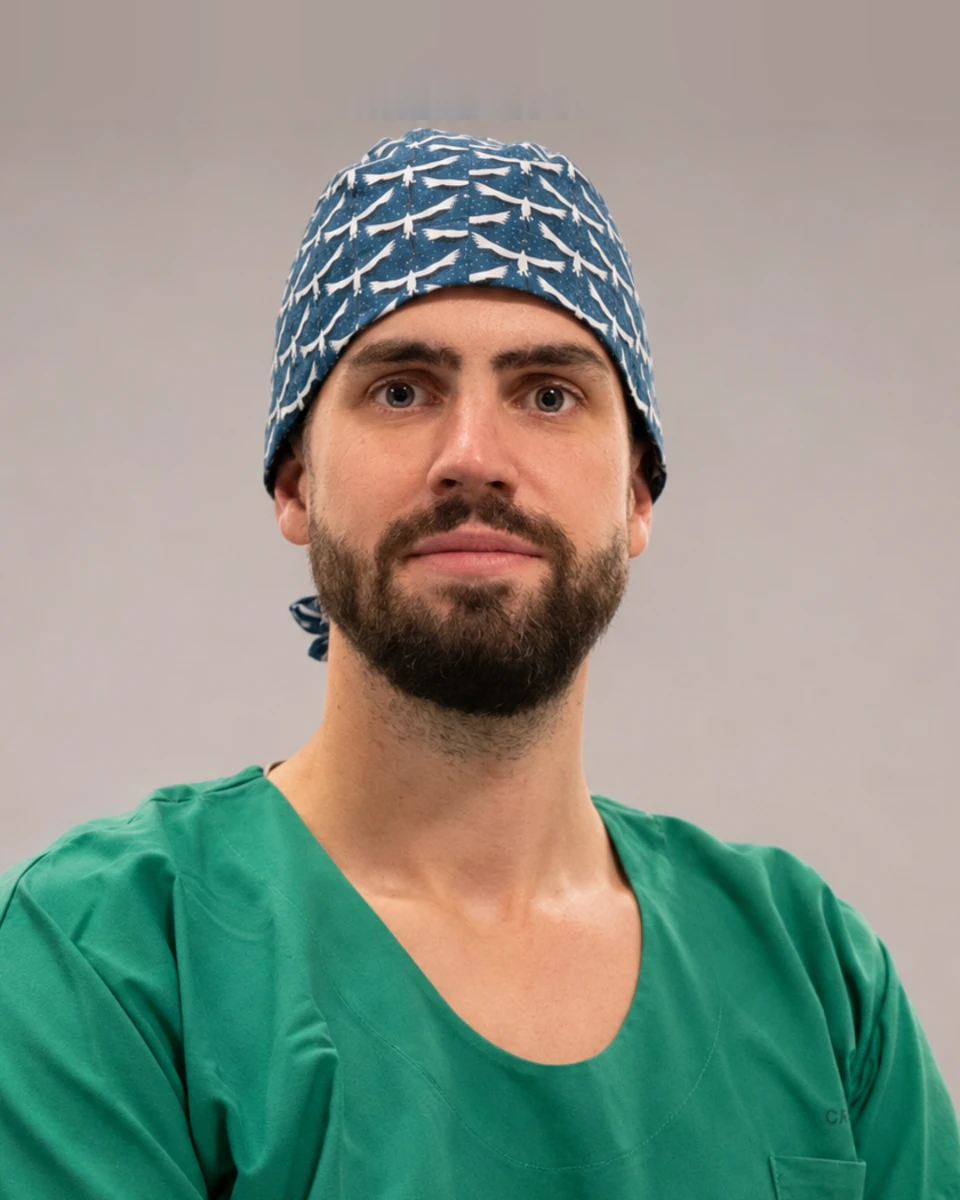
At the ophthalmology department of the Centre Médical des Aravis in Annecy, Dr Florian Baudin specialises in managing keratoconus. He performs:

  • Diagnosis of keratoconus using advanced eye examinations, such as corneal topography.
  • Regular follow-up of patients to monitor the course of the disease.
  • Medical treatment with lubricating eye drops to relieve symptoms and appropriate anti-allergy treatments.
  • Fitting contact lenses that are soft, rigid or scleral to correct vision.
  • Surgery for keratoconus, including cross-linking, insertion of intracorneal ring segments and corneal transplantation when needed.

Do not hesitate to contact the Centre Médical des Aravis to book an appointment with Dr Baudin if you have symptoms of keratoconus or questions about this condition.

Explore our information resource on corneal conditions and their management

Links

Explore this topic further

A question about your situation?

Your ophthalmologist answers your questions during the consultation. For a sudden symptom or sudden loss of vision, seek advice promptly: see the eye emergencies page.

Book an appointmentContact receptionOur locations

Our practices

Annecy-Argonay

645 route de Champ Farçon, 74370 Argonay

Faverges

27 place Gambetta, 74210 Faverges

Rumilly

5 rue Frédéric Girod, 74150 Rumilly

Sallanches

35 rue Emma Lanche, 74700 Sallanches

04 50 23 03 23Book an appointmentDirections and parkingReception Monday to Friday, 8 am – 6 pm