

A New Look at the Risks of Endophthalmitis After Intravitreal Injections
In a world where retinal diseases affect an increasing portion of the population, the treatment with intravitreal (IVT) injections of corticosteroids or anti-vascular endothelial growth factor (anti-VEGF) agents has become a common practice. However, this therapeutic advance is not without risks. Among the feared complications, acute endophthalmitis is at the top of the list. A groundbreaking study conducted by Dr. Florian Baudin and his team sheds crucial light on the risk factors associated with this serious complication.
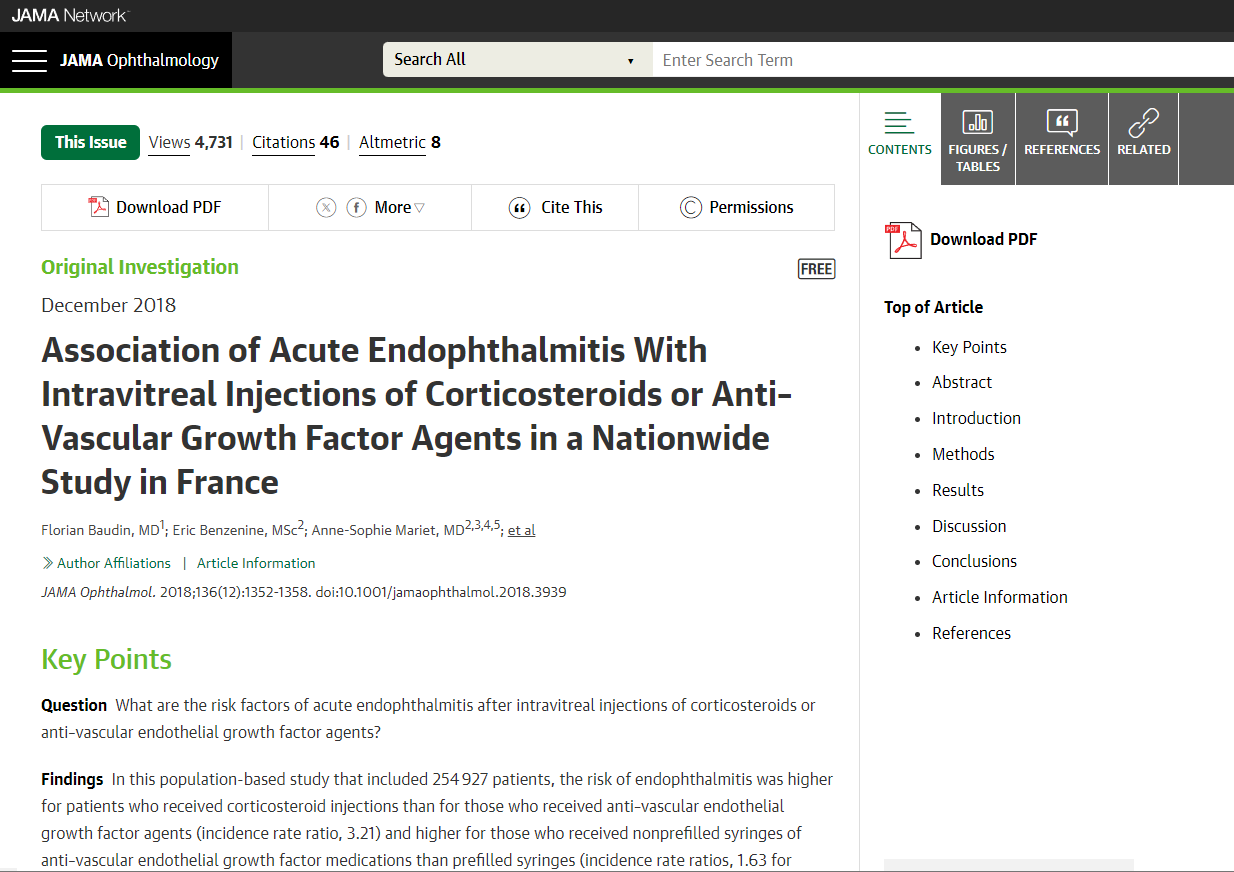
Published in JAMA Ophthalmology on 1 December 2018, this population-based cohort study analysed data from patients who received intravitreal injections in France between January 2012 and December 2015. Endophthalmitis risk was significantly higher after corticosteroid injections than after anti-VEGF injections, and higher with syringes that were not prefilled than with prefilled syringes.
Key Findings of the Study
- Question: What are the risk factors for acute endophthalmitis after intravitreal injections of corticosteroids or anti-VEGF agents?
- Results: Among 254,927 patients, corticosteroid injections were associated with a higher risk of endophthalmitis than anti-VEGF injections. The risk was also higher when syringes were not prefilled.
- Significance: While this study does not demonstrate a causal relationship, the data suggest that the use of pre-filled syringes of anti-VEGF agents could reduce the already low risk of acute endophthalmitis.
About the Study
The study was designed to evaluate the incidence of acute endophthalmitis following IVT injections of corticosteroids or anti-VEGF agents. Using data from the French National Inter-régional Health Insurance System, it included a large cohort of patients, allowing for a thorough and nationally representative analysis.
Conclusions and Relevance
The conclusions of this research confirm the low incidence of acute endophthalmitis after IVT, while highlighting an increased risk with the use of corticosteroids compared to anti-VEGF agents. Significantly, the study highlights the potential advantage of pre-filled syringes of anti-VEGF agents for further minimizing this risk.
This study is a valuable contribution to the medical literature, offering essential insights for clinical practice and patient safety. These findings will influence treatment protocols in the future.
The full article is available via Google Scholar or directly on the JAMA Ophthalmology website.
Your ophthalmologist answers your questions during the consultation. For a sudden symptom or sudden loss of vision, seek advice promptly: see the eye emergencies page.