

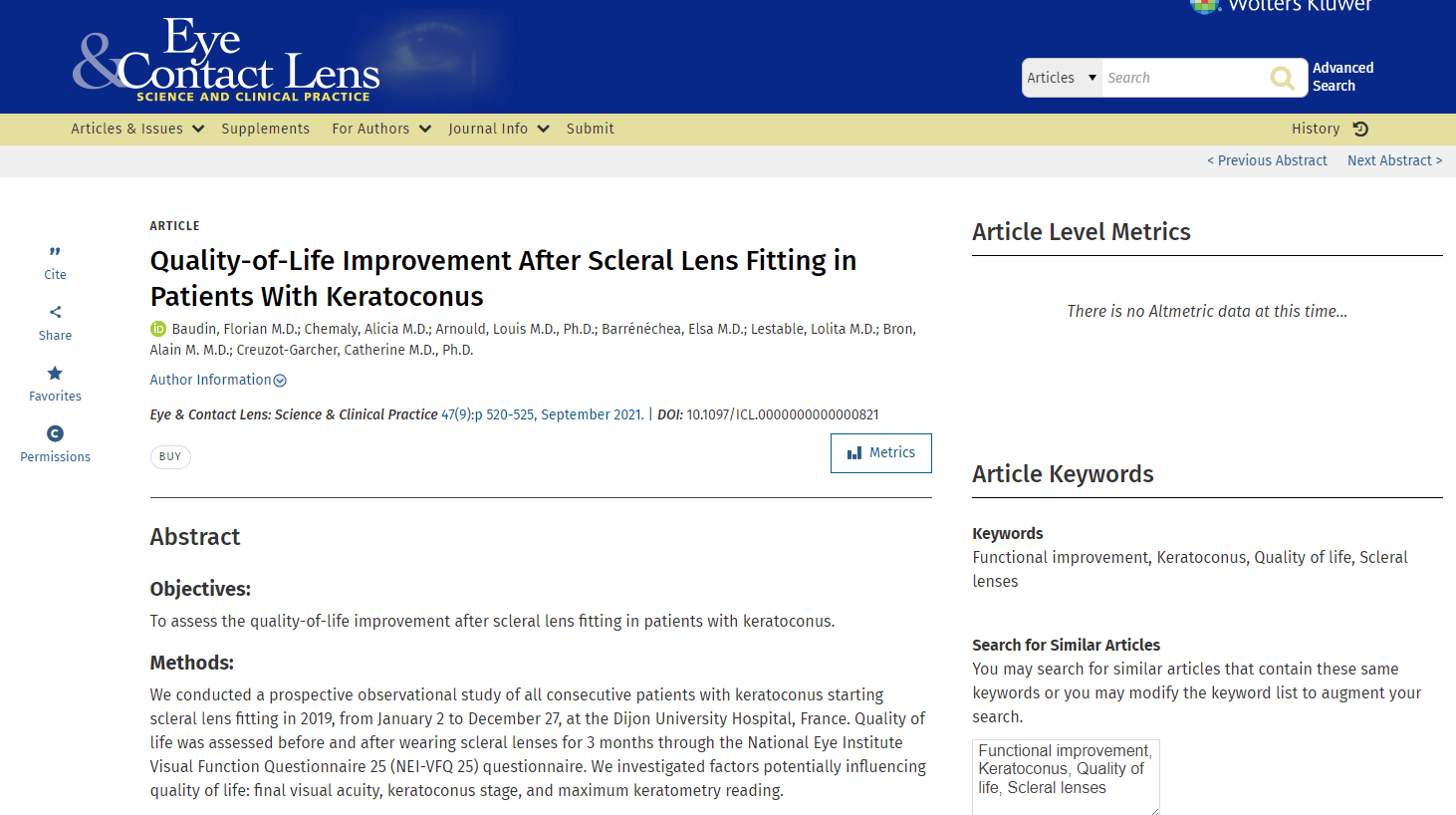
Quality-of-life improvement with scleral lenses in patients with keratoconus
In a pioneering study led by Dr Florian Baudin and his team, new hope is offered to patients suffering from keratoconus, a progressive corneal condition. Published in September 2021 in the journal Eye & Contact Lens, this research examined the effect of scleral lens fitting on the quality of life of individuals affected by this disease.
Objectives and Methodology
The study primarily aimed to evaluate improvement in quality of life following scleral lens fitting in patients with keratoconus. Through a prospective observational study, all consecutive patients starting scleral lens fitting at the University Hospital of Dijon, France, from 2 January to 27 December 2019, were included. Quality of life was assessed before and after three months of scleral lens use via the National Eye Institute Visual Function Questionnaire-25 (NEI-VFQ-25).
Key Findings
The study included 24 patients (41 eyes) who were successfully fitted with scleral lenses, primarily with a diameter of 18 mm. A significant improvement in visual acuity was observed after fitting, with greater visual gains noted in patients with more severe keratoconus. The mean NEI-VFQ-25 score increased by 19.5 points, indicating considerable improvement in quality of life, without direct correlation with disease severity or the magnitude of visual gain.
Conclusion and Implications
This research confirms the importance of scleral lenses in improving function and quality of life in patients with keratoconus, particularly those with advanced forms of the disease. It also highlights the crucial role of these devices in enhancing patient lives, regardless of disease progression or the visual improvement achieved. These findings are promising for advancing keratoconus treatment, offering patients improved vision and significantly better quality of life.
Healthcare professionals and patients interested in exploring these findings in more detail can access the full article via Eye & Contact Lens and also consult study details on Google Scholar, providing a comprehensive overview of this significant advancement in keratoconus care.
Your ophthalmologist answers your questions during the consultation. For a sudden symptom or sudden loss of vision, seek advice promptly: see the eye emergencies page.