

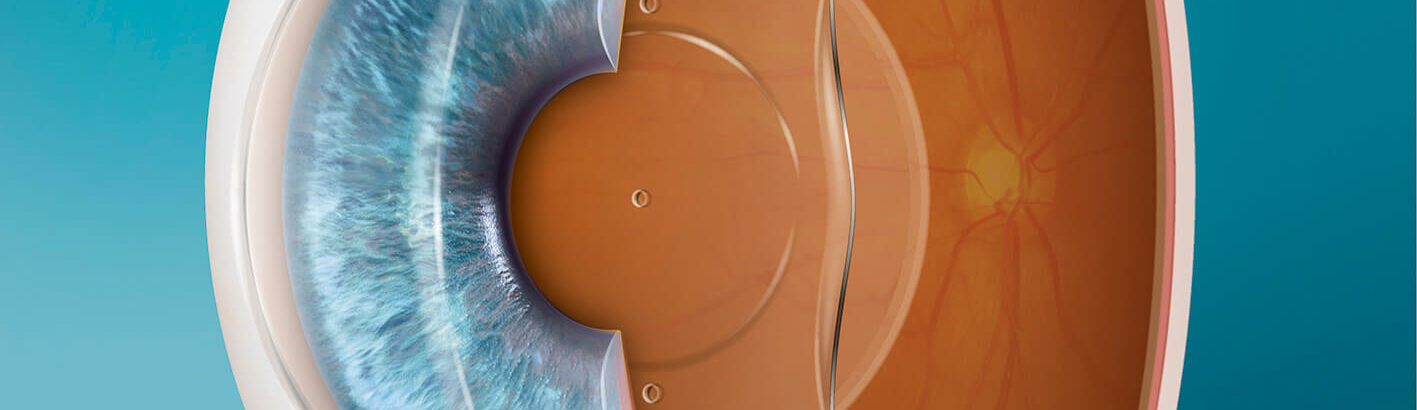
High myopia in Annecy: a phakic ICL implant as an alternative to laser surgery
Myopia: An Increasing Visual Problem
La myopie est un défaut de la vision très courant qui se caractérise par une Clear near vision, but blurred distance vision. Elle survient lorsque l'œil est légèrement trop long ou que la cornée (la surface avant de l'œil) est trop courbée, provoquant la focalisation des images en avant de la rétine au lieu de directement dessus.
Ce trouble visuel n'est pas seulement fréquent, il est aussi en Constant increaseIn France, it is estimated that approximately 44% of the population is currently myopic, and this figure could reach 56% by 2050. This progression makes it a real public health issue, especially since strong myopia (typically beyond -6 dioptres) is associated with an increased risk of serious eye complications such as retinal detachment, glaucoma or age-related macular degeneration.
Heureusement, de nombreuses solutions réfractives existent aujourd'hui pour corriger ou gérer la myopie.
Different Methods of Managing Myopia
In response to myopia, several approaches are possible, ranging from simple optical correction to definitive surgical interventions:
- Glasses: The simplest and oldest method. They correct vision by placing a corrective lens in front of the eye.
- Advantages: Simple, safe, and accessible.
- Disadvantages: Can be bulky, limit the visual field, and may have an undesirable aesthetic appearance.
- Contact Lenses: Placed directly on the cornea, they offer discreet correction and a wider field of vision.
- Advantages: Aesthetically pleasing and practical for sports.
- Disadvantages: Require careful handling and hygiene, can cause dryness or irritation, carry a (small but real) risk of corneal infection, and involve recurring costs.
- Myopia Control Solutions: For children and adolescents whose myopia is progressing, some methods aim to slow its progression:
- Specific lenses (e.g., Stellest™ lenses from Essilor, MiYOSMART lenses from Hoya): Utilise peripheral defocus technology.
- Orthokeratology: Wearing rigid gas permeable contact lenses overnight to temporarily reshape the cornea.
- Atropine-based eye drops (containing diluted atropine).
- Laser Refractive Surgery (LASIK, PKR): These widely used techniques reshape the cornea using an Excimer laser to permanently correct myopia.
- Advantages: Highly effective for many types of myopia, rapid, and provide stable results.
- Disadvantages: Not suitable for everyone (cornea too thin, myopia too high, severe pre-existing dry eye, certain corneal shapes).
- Intraocular Implant Surgery: When laser surgery is not indicated or desired, implants can be placed inside the eye.
- Replacement of the Natural Lens (PRELEX): The natural lens is removed and replaced with a multifocal or toric implant, similar to cataract surgery. Primarily reserved for older patients (over 50-55 years old) or in cases of very high myopia combined with early cataract development.
- Phakic IOLs (ICL): A corrective lens is added in addition to the natural lens. This is a particularly interesting option for younger patients with high myopia.
-

Lunettes
-

Lentilles de Contact
-

Chirurgies Laser
-
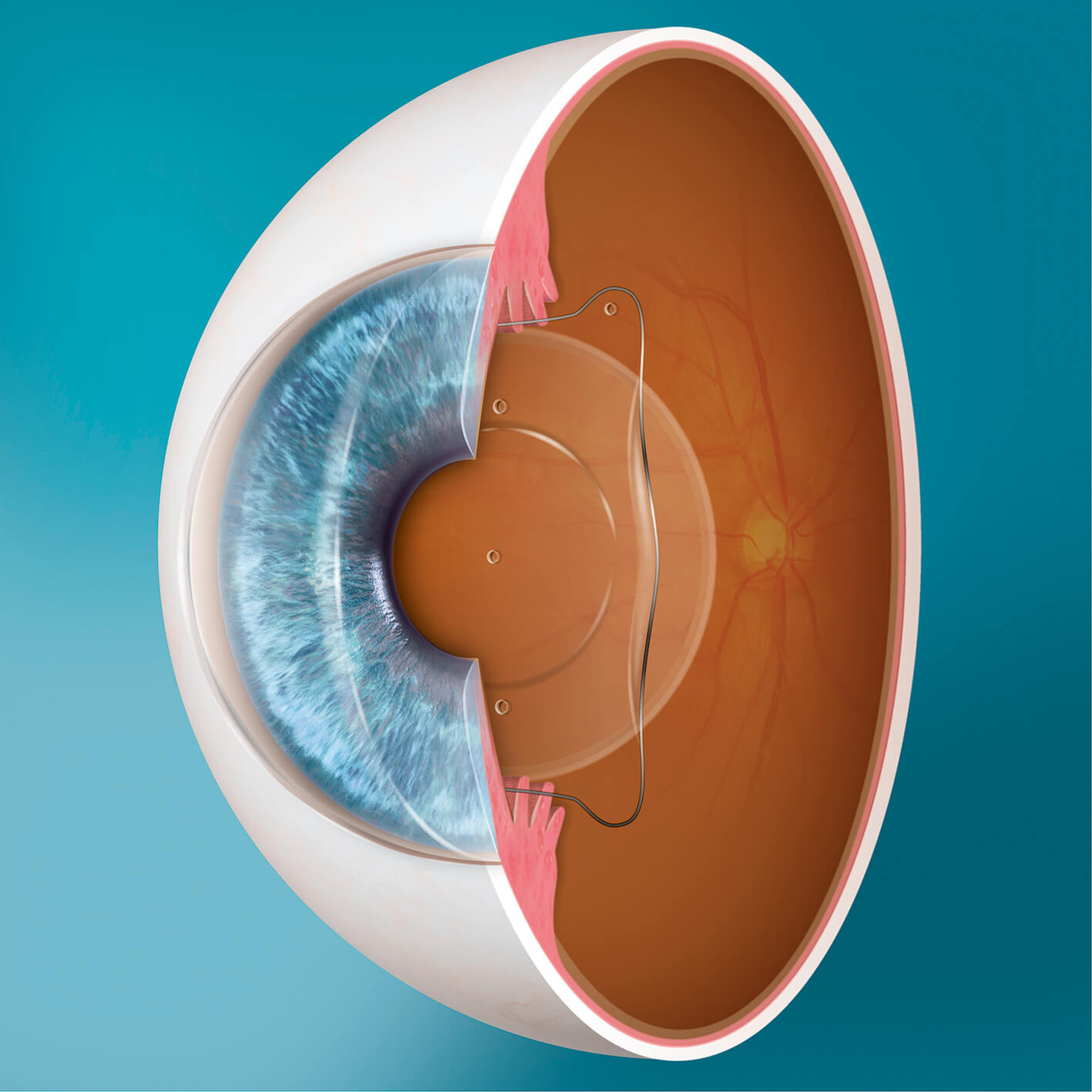
Implant Phake ICL
Focus on the Phakic IOL: A Solution for High and Complex Myopias
A phakic ICL (Implantable Collamer Lens) is a soft, thin, biocompatible intraocular lens placed behind the iris and in front of the eye’s natural lens. It works like a contact lens, but stays inside the eye permanently or for a very long time.
Who is the ICL suitable for?
This technique is an excellent alternative for patients who are not suitable candidates for laser surgery, particularly in cases of:
- High or very high myopia (exceeding the limits of laser correction)
- Too thin cornea to be safely reshaped with laser
- Irregular cornea (certain types of astigmatism, stabilised keratoconus)
- Moderate to severe dry eye (ICL generally does not worsen dry eye as much as LASIK)
- Intolerance to contact lenses
Advantages of ICL:
- Correction of a wide range of myopia, even very high levels.
- Excellent visual quality, often described as very sharp.
- Reversibility: The implant can be removed if necessary.
- Preservation of the natural lens and accommodation (near vision) in young patients.
- Less impact on dry eye than LASIK.
Offered by Dr Florian Baudin at the Argonay Clinic (Ramsay Santé), this technique represents a significant advancement for managing complex visual defects in Annecy and its surroundings.
ICL Surgery Explained in Video by Dr. Baudin
To better understand the principle of the ICL implant and visualize the course of the procedure, we invite you to watch this video. It combines an explanatory presentation of the concepts and real images of the surgery performed by Dr. Florian Baudin at the Argonay Clinic.
Conclusion: A Personalized Solution for Your Vision
Myopia is common, but the best correction varies from person to person. Glasses and contact lenses remain options, and refractive surgery can offer lasting correction and reduce the daily impact of vision problems. When laser surgery is unsuitable, particularly for people with high myopia or a thin cornea, a phakic ICL is a modern, safe and effective alternative now available in Annecy.
Please do not hesitate to book an appointment for a comprehensive assessment to discuss the best option for your eyes and your expectations.
Useful Links:
- Book an appointment with Dr. Baudin on Doctolib
- Annecy Laser Vision Website
- Annecy Ophtalmo Website
- Discover our Annecy Laser Vision YouTube channel
- Follow the Clinique d'Argonay on LinkedIn
- French Society of Ophthalmology (SFO) - Patient Information
Disclaimer: The information contained in this article is provided for informational purposes only and should not be considered a substitute for a personalised consultation with a qualified ophthalmologist. Only a comprehensive pre-operative examination can determine the best vision correction strategy for you.
À lire aussi
Your ophthalmologist answers your questions during the consultation. For a sudden symptom or sudden loss of vision, seek advice promptly: see the eye emergencies page.