

MIGS: a procedure to reduce intraocular pressure at the same time as cataract surgery
Lorsqu'une personne atteinte de glaucome envisage de subir une intervention de la cataracte, une procédure MIGS (minimally invasive glaucoma surgery, i.e. "minimally invasive glaucoma surgery") pour aider à contrôler la pression oculaire peut également être envisagée. L'implantation de MIGS en même temps que la chirurgie de la cataracte peut permettre au patient de cesser d'utiliser un ou plusieurs collyres pour le glaucome. La récupération prévue après une intervention combinée MIGS et chirurgie de la cataracte est presque identique à celle de la chirurgie de la cataracte seule. De grandes études ont montré que le MIGS est très sûr pour ceux qui sont éligibles à cette intervention.
How does MIGS work?
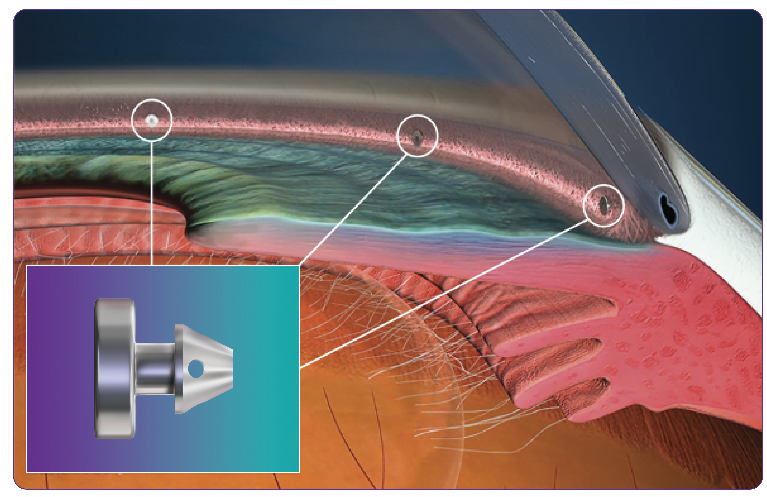
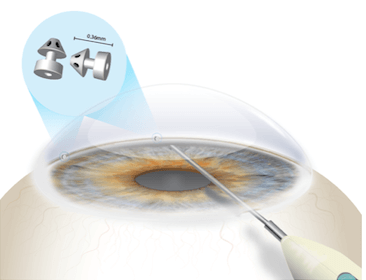
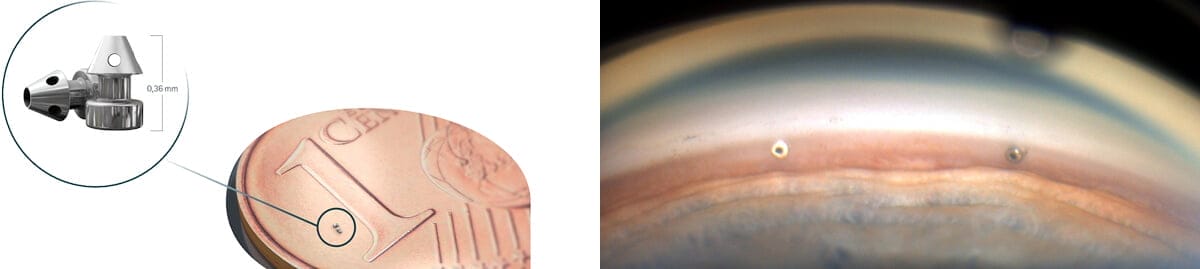
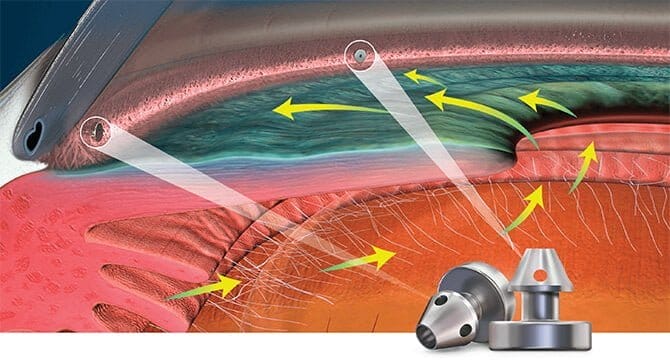
Pour exemple, le iStent-type MIGS device se compose de deux minuscules tubes. Chaque iStent est environ de la taille d'une lettre sur la face d'une pièce de monnaie. Le iStent crée un chemin qui permet au liquide à l'intérieur de l'œil de contourner le drain naturel de l'œil. La réduction du drainage est l'une des raisons pour lesquelles une pression oculaire élevée peut se développer dans le glaucome. On estime par ailleurs que la chirurgie de la cataracte seule peut réduire la pression chez certains patients : 50% d'indépendance en traitement antiglaucomateux après chirurgie de cataracte seule si un seul traitement était instillé.
After iStent combined with cataract surgery, the rate of independence from glaucoma medication increases to 68%.
What are the steps of the surgery?
The surgery is performed in an operating room. Your eye will be numbed with drops. An anaesthetist will administer medication intravenously to keep you relaxed and calm during the procedure. The eye is cleaned and your face is covered with a sterile sheet. An instrument opens the eyelids. Small incisions for cataract surgery are made on the front of the eye. The MIGS device is placed through these same incisions. A special lens is placed in the eye to observe the natural drainage of the eye, and microstents are inserted into the drain. The MIGS procedure adds approximately 5 minutes to the surgery.
What will you feel during the procedure?
You may see bright lights during the procedure, but you should not feel any pain. You may be asked to move your eyes in different directions to place the stents in the eye.
What happens after the procedure?
MIGS devices begin to drain fluid immediately upon placement. This lowers intraocular pressure, and in some patients, one or more glaucoma eye drops may be discontinued after the procedure. You will leave with a clear plastic shield, with or without a bandage over the operated eye. You must leave accompanied by someone, as you have received sedating medication.
What eye drops should I use after the procedure?
Most patients will need to use steroid and antibiotic eye drops. The frequency of use of steroid eye drops will depend on the level of eye inflammation.
Can I stop my glaucoma eye drops after the procedure?
Your doctor will tell you which eye drops to continue using and how often during each visit, depending on how your eye is healing. Sometimes, patients may be able to reduce the number of eye drops they use. Even if you continue to take glaucoma medication after the procedure, it is considered successful if your eye pressure is lower. The need to continue using eye drops long-term after this treatment varies greatly depending on the type of glaucoma and its progression.
Will my vision improve immediately after the procedure?
In the first few days after the procedure, your vision may be blurry. This should improve within 1 to 2 weeks, although it may sometimes take longer. The eye that has not been operated on will not be affected and can be used to see during the recovery period (if it has vision).
Will there be any restrictions after the procedure?
Vous recevrez des instructions détaillées après votre intervention qui seront spécifiques aux besoins de votre œil. En général, les directives suivantes s'appliquent :
• The plastic shield should be worn while sleeping for 1 week or more after the procedure to protect the eye.
• When you are outdoors during the day, you should wear sunglasses to protect your eye from the sun and wind.
• During the first few weeks, avoid strenuous activities (running, lifting heavy objects), rubbing your eye, wearing eye makeup, and swimming.
• Il n'y a pas de restrictions pour la lecture, la télévision, l'utilisation de votre téléphone, de votre tablette, de votre ordinateur, etc., mais vous pouvez vous fatiguer plus rapidement pendant ces activités.
What are the possible side effects of MIGS surgery?
MIGS surgery is considered a very low-risk addition to cataract surgery. However, no surgical procedure is without risk, and the possible complications are the same as those encountered during cataract surgery: infection, bleeding in the front or back of the eye, the need for further surgery, and other complications related to eye surgery.
Will MIGS cure my glaucoma?
The simple answer is no. Glaucoma is a chronic condition that requires constant monitoring and treatment. The MIGS procedure will help to lower your eye pressure. However, it will not reverse any vision loss that has already occurred.
What happens if the implant doesn't work?
Clinical trials and our own experience have shown that glaucoma medication or further surgery may be necessary over time after a MIGS procedure. This depends on what is considered a "safe" eye pressure, the healing of your eye, the type of glaucoma you have, and other factors. After your procedure, your doctor will closely monitor you so that we can adjust the therapy if necessary.
For more information, please visit:
American Academy of Ophthalmology Patient Information Website: https://www.aao.org/eye-health/diseases/what-is-glaucoma American Glaucoma Society Patient Education Website: https://www.americanglaucomasociety.net/patients/patient-education
At the Annecy Aravis Medical Center, our doctors are here to provide you with high-quality ophthalmological care. If you are considering cataract surgery and think you may be a suitable candidate for the MIGS procedure, please do not hesitate to contact us. Our surgeons perform this procedure. Your vision is our priority.
À lire aussi
Your ophthalmologist answers your questions during the consultation. For a sudden symptom or sudden loss of vision, seek advice promptly: see the eye emergencies page.