

Perioperative management of blepharitis: report from the Théa meeting on 15 October 2025
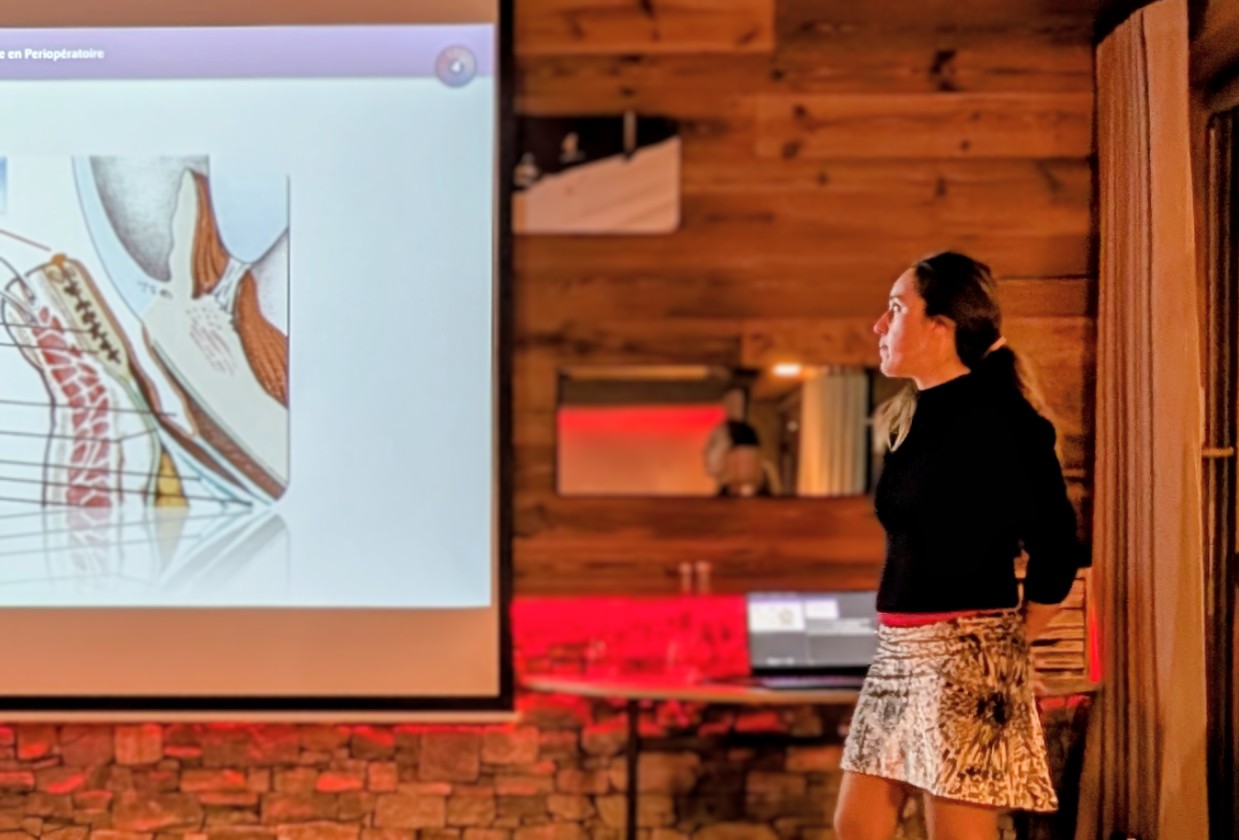
On 15 October 2025, an information evening was organised by Théa during which Dr Aurélia Gave presented an essential overview of the management of blepharitis in the surgical context (perioperative). This condition, often underestimated, has direct implications for the success of cataract, refractive (LASIK, PKR) and eyelid surgeries (ectropion). Here is a summary of the key points.
What is blepharitis?
Blepharitis is an inflammation of the eyelids. Contrary to popular belief, it does not have a single cause but can be of microbial, allergic or related to dysfunction of the Meibomian glands.
Clinically, it manifests with various signs:
- Telangiectasias (dilatation of small blood vessels) on the eyelid margin.
- Recurrent chalazia.
- Crusts at the base of the eyelashes.
- Superficial punctate keratitis (SPK).
Anterior blepharitis is distinguished from posterior blepharitis.
Blepharitis and Cataract Surgery: Risk of Endophthalmitis
The impact of blepharitis on cataract surgery is significant, with the main risk being endophthalmitis. A striking finding was highlighted: 75% of the bacteria responsible for endophthalmitis come from the patient’s own eyelids and conjunctiva.
A prospective study conducted in Madrid (Pera et al.) compared the effectiveness of Blephaclean wipes combined with warm compresses with an untreated control eye. The results were significant: a reduction in bacterial load on the eyelids of 58% at day 3 and 65% at day 5. The use of these pre-operative treatments therefore allows to reduce this bacterial load without selecting resistant germs.
Furthermore, blepharitis is a major cause of surgery cancellation. A study by Stead et al. on 960 patients identified blepharitis as the main cause of cancellation. Appropriate eyelid care can reduce these cancellations by 50%.
Blepharitis and Refractive Surgery (LASIK/PKR): Maintaining Refractive Stability
In refractive surgery, blepharitis and Meibomian gland dysfunction (MGD) are crucial. A Korean study demonstrated that LASIK, LASEK, and PKR surgeries result in a significant reduction in Meibomian gland function post-operatively.
Another study, Russian (Yanshenko et al.), analyzed the effect of pre-operative eyelid care for LASIK in patients with allergic blepharoconjunctivitis. After 3 months, the condition of the glands and the “break up time” (time for the tear film to break) improved significantly, allowing LASIK to be performed in 80% of cases with satisfactory results.
Case Study: When blepharitis mimics a LASIK failure
Dr Gave presented the case of Mrs D, a 54-year-old patient who underwent a PresbyLasik procedure and had a history of chemotherapy. While the first month post-operatively was satisfactory (OD 10/10 P2), the patient returned at 12 months with a deterioration (OD 7/10, refraction: +1).
Instead of concluding that the procedure had failed and suggesting a revision, a thorough examination was performed. This revealed the true cause: blepharitis and KPS (keratitis), which were favoured by screen time and a history of chemotherapy.
Following medical treatment (Théalose, Softacort, Therapearl mask), the examination at 1 month showed resolution of the KPS and blepharitis, and notably complete visual recovery (10/10 OD SC).
‘Keratitis and blepharitis can affect refraction and best uncorrected visual acuity (MAVNC in French). Medical treatment should always come before considering a surgical enhancement.’
Dr Gave- Annecy Laser Vision
Blepharitis and Ectropion Surgery
A direct link was established between blepharitis and ectropion. A large retrospective Israeli study (Sheba Medical Center) involving over 37,000 patients showed a significant increase in ectropion in patients with blepharitis (0.8% vs 0.1%).
Chronic inflammation from blepharitis contributes to skin retraction leading to ectropion. Therefore, treatment should be twofold: medical treatment of blepharitis (e.g., with Blephademodex, heating masks, Blephaderm) combined with ectropion surgery. This pre-operative medical treatment can reduce ectropion and improve post-operative results.
Conclusion: Therapeutic Solutions Discussed
The presentation highlighted the importance of screening and treating blepharitis before any ocular surgery to ensure optimal and safe results. Dr. Gave concluded by presenting several solutions from the Théa laboratory that are suitable for these peri-operative contexts:
Wipes with micellar lotion, zinc (antibacterial), and hyaluronic acid. Indicated pre-operatively for cataract, intravitreal injection (IVT), and LASIK to reduce bacterial load.
Heating mask, particularly useful pre-operatively for LASIK to improve meibomian gland function.
Ointment containing trehalose, hyaluronic acid, and Ophiopogon japonicus (anti-inflammatory that respects the microbiome). Indicated pre- and post-operatively for ectropion.
Specific wipes for treating blepharitis caused by Demodex mites. Appropriate for pre-operative preparation prior to ectropion surgery.
À lire aussi
Your ophthalmologist answers your questions during the consultation. For a sudden symptom or sudden loss of vision, seek advice promptly: see the eye emergencies page.